Материал: Физико-математическое моделирование систем. материалы XX Международного семинара. Батаронов И.Л., Шунин Г.Е

UDC 539.126
ELECTROMAGNETIC FORM FACTOR OF LIGHT MESONS WITH NEXT-TO-LEADING ORDER ACCURACY OF RUNNING COUPLING
CONSTANT METHOD AND THE NEW RENORMALIZATION SCALE
Y. V. Mamedova
Institute of Applied Mathematics, Baku State University, Azerbaijan
mamedova_yegana@yahoo.com
The power-suppressed corrections to the light pseudoscalar (pion, kaon) and vector ( L - meson) mesons’ electromagnetic form factors FM Q2 are considered using the running coupling constant method at the next-to-leading order accuracy [1-3]. In calculations the new renormalization scale R2 1 x Q2 /2 (or xQ2 /2) is used [1-4]. The mesons’ distribution amplitudes (DAs) obtained in the framework of the QCD sum rules method are used [5-9].
Keywords: quantum chromodynamics, mesons’ electromagnetic form factor, running coupling constant method, distribution amplitude.
The hadrons‘ electromagnetic (elm) form factors (ff) F Q2 |
is one of the in- |
M |
|
teresting branches of the perturbativ QCD (pQCD) [10]. In [11-13] the pion, kaon and L - meson elm ffs using the running coupling constant method and the DA obtained in the context of QCD sum rules are calculated. In these works the dependence of the mesons’ DAs on the factorization scale Q2 is taken into account [15-16]. In [14] we did the same for L -meson using the running coupling constant method with next-to-leading order accuracy and Ball-Braun [17] function. In this work we consider the same problems by taking into account the second term in the expansion of the running coupling constant s ( Q2 ) in terms of s (Q2 ). It is well known that in the framework of pQCD a meson elm ff can be written as [18-20]
1 |
1 |
|
F Q2 dxdy y,Q2 H x, y,Q2 , S ( R2 ) x,Q2 , |
(1) |
|
0 |
0 |
|
where x, F2 is the meson distribution amplitude (DA), H x,y,Q2, S ( R2) is
the hard-scattering amplitude of the subprocess qq qq , calculable in the
framework of pQCD, Q2 q2 is the momentum transfer in the process. For the fac-
torization scale F2 , a natural choice is F2 Q2 [4]. The renormalization scale R2 is
chosen equal to the gluon virtuality R2 |
xyQ2, R2 1 x 1 y Q2. We choose it as |
|||||
R2 |
1 |
xQ2, R2 |
1 |
1 x Q2 . |
(2) |
|
|
|
|||||
2 |
|
2 |
|
|
||
At the leading order of pQCD with this renormalization scales for |
TH will be |
|||||
in the following form [18-20] |
|
|
|
|
||
70
x, y,Q2 |
, |
S |
2 |
|
16 CF |
|
|
2 |
|
S 1 x Q2 |
|
/2 |
1 |
|
S xQ2 |
/2 , |
(3) |
||||||||||||||||
|
|
|
|
|
|
|
|
|
|
|
|
||||||||||||||||||||||
H |
|
R |
|
|
|
|
Q |
2 |
|
|
|
3 |
|
1 x 1 y |
|
3 |
|
xy |
|
|
|||||||||||||
|
|
|
|
|
|
|
|
|
|
|
|
|
|
|
|
|
|
||||||||||||||||
where CF 4/3 is the color factor [9]. S ( R2 ) with |
R2 from Eq. (2) suffers be- |
||||||||||||||||||||||||||||||||
cause of infrared singularities at the soft regions |
x 0, |
x 1. For regularization of |
|||||||||||||||||||||||||||||||
S ( R2) in these end-point regions, let |
us |
|
|
express |
the |
|
running |
coupling |
constant |
||||||||||||||||||||||||
S Q2 in terms of |
S Q2 using the renormalization group equation [21]. The re- |
||||||||||||||||||||||||||||||||
normalization group equation for the running coupling S Q2 has the form |
|
||||||||||||||||||||||||||||||||
|
S Q2 |
|
0 |
|
S |
Q2 |
2 |
1 |
|
|
S |
Q2 3 , |
|
(4) |
|||||||||||||||||||
|
|
4 |
|
|
|
|
|||||||||||||||||||||||||||
|
ln |
|
|
|
|
|
|
|
|
|
|
|
|
|
16 2 |
|
|
|
|
|
|
|
|||||||||||
where |
|
|
|
|
|
|
|
|
|
|
|
|
|
|
|
|
|
|
|
|
|
|
|
|
|
|
|
|
|
|
|
|
|
|
|
|
|
|
0 |
11 |
2 |
n |
|
f |
, |
|
|
1 |
102 |
38 |
n |
f |
|
|
(5) |
||||||||||||
|
|
|
|
|
|
|
|
|
|
||||||||||||||||||||||||
|
|
|
|
|
|
|
|
3 |
|
|
|
|
|
|
|
|
|
3 |
|
|
|
|
|
||||||||||
are the QCD beta-functions one-loop and two-loop coefficients, respectively [21]. The solution of this equation obtained by keeping the leading ( S ln )k and next-to- leading Sk ln k 1 powers is [21]
S Q2 |
S Q2 |
|
S2 Q2 1 |
|
ln 1 |
S 0 /4 ln |
. |
(6) |
1 S 0 /4 ln |
4 0 |
|
|
|
||||
|
|
|
1 S 0 /4 ln 2 |
|
||||
Now let us take the renormalization scale R2 as in Eq.(2) and use the formula
(6) for calculation of the pion, kaon and L -meson elm ffs. The QCD sum rules DA for the meson M has the form [22, 23]
|
|
|
x, |
2 |
|
|
asy |
x |
|
|
|
|
|
|
|
|
|
|
|
|
|
|
|
2 |
|
2x |
1 |
3 |
|
, |
(7) |
|||||||||||||||||
M |
F |
M |
|
|
2x 1 2x 1 |
|
|
|
|
|||||||||||||||||||||||||||||||||||||||
|
|
|
|
|
|
|
|
|
|
|
|
|
|
|
|
|
|
|
|
|
|
|
|
|
|
|
|
|
|
|
|
|
|
|
|
|
|
|
|
|||||||||
where asyM |
x |
is the meson M asymptotic DA |
|
|
|
|
|
|
|
|
|
|
|
|
|
|
|
|
|
|
|
|
||||||||||||||||||||||||||
|
asy |
|
x,Q |
2 |
|
|
|
|
|
f |
|
|
|
|
|
x 1 x , |
|
asy |
|
x,Q2 |
|
|
|
|
|
|
|
|
|
f |
Lx 1 x . |
(8) |
||||||||||||||||
|
3 |
|
|
|
|
|
|
|
|
2 |
3 |
|||||||||||||||||||||||||||||||||||||
(K) |
|
|
, |
|
, |
, |
|
|
|
|
|
(K) |
|
|
|
|
|
|
|
|
|
|
|
|
|
|
|
|
|
|
|
|
|
|
|
|
|
|||||||||||
In Eq. (7) |
|
|
|
|
are function of the factorization scale |
|
|
|
and are given by |
|||||||||||||||||||||||||||||||||||||||
the formulae [22] |
|
|
|
|
|
|
|
|
|
|
|
b |
1 A Q2 , |
2 |
bA Q2 |
, |
|
|
|
|
|
|||||||||||||||||||||||||||
|
|
|
|
|
|
2 |
a |
|
|
|
|
|
||||||||||||||||||||||||||||||||||||
|
|
|
|
|
F |
|
|
|
|
|
|
|||||||||||||||||||||||||||||||||||||
|
|
|
|
|
|
|
|
|
|
|
|
|
|
|
|
|
5 |
|
|
2 |
|
|
|
|
|
|
|
F |
|
|
|
|
2 |
|
|
|
|
|
|
|
|
|
|
|
||||
|
|
|
|
|
|
|
|
|
|
|
|
|
|
|
|
|
|
|
|
|
|
|
|
|
|
|
|
|
|
|
|
|
|
|
|
|
|
|
|
|
|
|
|
|
|
|||
with ( |
) |
|
|
|
|
2 |
|
3с |
А Q2 A |
|
Q2 |
, |
2 |
cA Q2 , |
|
|
|
|
(9) |
|||||||||||||||||||||||||||||
|
|
|
F |
|
|
|
|
|
|
|||||||||||||||||||||||||||||||||||||||
|
|
|
|
|
|
|
|
|
|
|
7 |
|
|
1 |
|
|
3 |
|
|
|
|
|
|
|
F |
|
|
|
|
|
2 |
|
|
|
|
|
|
|
|
|
||||||||
defined as |
|
|
|
|
|
|
|
|
|
2 |
|
|
|
|
|
2 |
|
|
|
|
|
2 |
n0 |
|
|
|
|
|
|
|
|
|
|
|
||||||||||||||
|
|
|
|
|
|
|
|
|
|
|
|
|
|
n |
|
Q |
|
|
|
S |
Q |
|
|
|
S |
|
|
0 |
|
|
|
|
. |
|
|
|
|
|
|
|
|
(10) |
||||||
|
|
|
|
|
|
|
|
|
|
|
|
A |
|
|
|
|
|
|
|
|
|
|
|
|
|
|
|
|
|
|
|
|
|
|
|
|
||||||||||||
71
In Eq. (8) fM is the meson decay constant: f 0.093 GeV, fK 0.112 GeV, f L 0.141GeV. The values of constants a, b, c have been found in the framework
of QCD sum rules |
method at the normalization points 0 0.5GeV (pion, kaon), |
||||||||||||||||||||||||||||
0 1GeV ( L -meson). We have: |
|
|
|
|
|
|
|
|
|
|
|
|
|
|
|
|
|||||||||||||
– for the pion |
|
|
|
|
|
|
|
|
|
|
|
|
|
|
|
|
|
|
|
|
|
|
|
|
|
|
|
|
|
|
|
|
|
|
|
a 0, b 5, Chernyak-Zhitnitsky DA [23]; |
|
|
(11) |
||||||||||||||||||||
– for the kaon |
|
|
|
|
|
|
|
|
|
|
|
|
|
|
|
|
|
|
|
|
|
|
|
|
|
|
|
|
|
|
a 0.4, b 3, c 1.25, |
Farrar-Huleihel-Zhang DA [24]; |
|
|
(12) |
||||||||||||||||||||||||
– for the L -meson |
|
|
|
|
|
|
|
|
|
|
|
|
|
|
|
|
|
|
|
|
|
|
|
|
|||||
|
|
|
|
|
|
|
|
a 0.7, |
b 1.5, Ball-Braun DA [17]. |
|
|
|
(13) |
||||||||||||||||
After substitution of (3), (6) and (7) into Eq. (1) the form factor takes the form |
|||||||||||||||||||||||||||||
|
|
|
|
|
|
|
|
|
|
|
|
|
|
|
|
|
|
|
|
|
|
2 |
1 |
|
|
|
|
||
|
|
|
|
|
|
|
2 |
|
2 |
|
|
|
|
2 |
|
2 |
|
|
|
|
|
|
|
|
|||||
|
|
|
|
|
|
|
|
|
|
|
|
|
|
|
16 fM |
|
|
|
|
|
|
||||||||
|
|
|
|
|
|
Q |
|
FM Q |
|
Q |
|
FM Q |
|
1 C1 |
|
|
|
|
|
|
|
|
|
||||||
|
|
|
|
|
|
|
|
|
|
|
0 |
|
0 |
|
|
|
|||||||||||||
|
|
|
|
|
|
~ |
|
|
|
|
|
~ |
|
|
|
|
|
|
|
|
|
|
|
|
|||||
|
|
21 1 |
|
|
|
|
|
|
|
|
|
|
|
|
|
|
|
|
|
|
|
|
|
||||||
|
|
y M y,Q2 |
x M x,Q2 ln t ln 1 x lnt dxdy |
|
|
|
|||||||||||||||||||||||
|
|
|
0 0 |
|
|
|
|
|
|
|
|
|
|
|
|
|
|
|
|
|
|
|
|
|
|
|
|||
3 |
|
|
|
|
|
|
|
|
|
t ln 1 x 2 |
|
|
|
|
|
|
|||||||||||||
|
|
|
|
|
|
|
|
|
|
|
|
|
|
|
|
|
|
|
|
||||||||||
1 |
1 1 |
|
|
|
|
~ |
|
|
|
2 |
|
|
~ |
|
|
x,Q |
2 |
ln t ln x lnt dxdy |
|
||||||||||
0 0 |
|
1 y M y,Q |
|
1 x M |
|
|
|||||||||||||||||||||||
|
|
|
|
|
|
|
|
|
|
|
|
|
|
|
|
|
|
|
|
|
|
|
|
|
|
, |
(14) |
||
|
|
|
|
|
|
|
|
|
|
|
|
t ln x 2 |
|
|
|
|
|
|
|
|
|||||||||
3 |
|
|
|
|
|
|
|
|
|
|
|
|
|
|
|
|
|
|
|
|
|
||||||||
|
2 |
|
|
is the meson |
DA without |
asy |
x |
; C1 1 for the pion and kaon |
|||||||||||||||||||||
here M x,Q |
|
|
M |
|
|||||||||||||||||||||||||
and C1 2 for |
the L -meson; |
|
t 4 / S Q2 / 2 0 . [Q2FM Q2 ]1 |
is the meson’s |
|||||||||||||||||||||||||
elm ff found in [11-13, 22] using only the first term in (6).
In analytical calculations we apply the inverse Laplas transforms
|
1 |
|
|
1 |
|
|
|
|
||
|
|
|
|
exp u t z u 1du, |
Re 0 |
(15) |
||||
|
|
|
|
|||||||
|
t z |
|
0 |
|
|
|||||
and |
|
|
|
|
|
|
|
|
||
|
|
ln t z |
|
|
|
|
||||
|
|
exp u t z 1 C lnu udu. |
(16) |
|||||||
|
|
2 |
|
|||||||
|
|
t z |
0 |
|
|
|||||
In Eq. (16) С 0.577216 is the Euler-Mascheroni constant. After some calculations we get
|
|
|
|
|
|
|
16 fM |
2 |
|
|
|
|
Q2 FM Q2 C1 |
|
exp tu B Q2 FM |
u du |
|
||||||||
|
|
|
||||||||||
|
|
|
|
|
|
|
|
0 |
|
0 |
|
|
|
|
|
|
|
|
|
|
|
|
|
||
|
|
2 |
|
1 |
|
|
|
|
|
|
|
|
C1 |
16 fM |
|
exp tu u 1 C lnt lnu B Q2FM u du, |
(17) |
||||||||
|
|
|||||||||||
|
|
0 |
|
|
0 |
0 |
|
|
|
|
|
|
|
|
|
|
|
|
|
|
|
|
|||
72
where the Borel transform B Q2F |
u is |
|
|
|
|
|
|
M |
|
|
|
|
|
|
|
|
N |
|
|
1 |
|
|
|
B Q2FM u ln |
Q2 |
|
. |
|
(18) |
||
|
|
||||||
|
n 1 |
|
|
n u |
|
u has |
|
The functions l (Q2) are found in [22]. The Borel transform B Q2F |
M |
||||||
n |
|
|
|
|
|
|
|
the infrared-renormalon poles at n 1, 2, ...N [25]. Applying the principal value prescription which removes renormalon divergencies we obtain
|
|
|
Q2F |
Q2 res |
Q2F |
Q2 res |
|
|||||
|
|
|
|
|
M |
|
|
|
M |
|
|
|
C1 |
2 |
|
1 |
ln Q2 |
1 C lnt fn t gn t , |
(19) |
||||||
16 fM |
||||||||||||
|
|
|
|
|
|
|
|
N |
|
|
|
|
|
|
|
0 |
0 |
n 1 |
|
|
|
||||
where we introduce the following notations: |
|
|
||||||||||
|
|
|
|
|
|
|
|
|
|
|
|
|
fn t P.V. |
exp tu udu |
, |
|
|
|
|
||||||
|
|
|
|
|||||||||
0 |
|
n u |
|
|
|
|
|
|
|
|
||
|
|
|
|
|
|
|
|
|
|
|
||
gn t P.V. |
exp tu ulnudu |
. |
|
|
|
|||||||
|
|
|
|
|||||||||
0 |
|
|
n u |
|
|
|
|
|
|
|
|
|
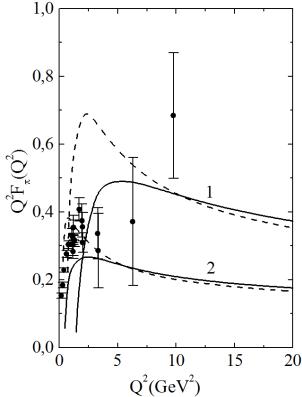
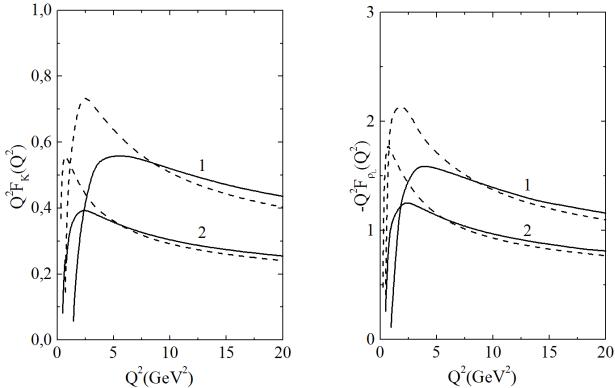
In the expressions (18), (19) the sum runs up to N 4 in the case of the pion,L -meson and up to N 5 for kaon. The results of our numerical calculations are depicted in Figs. 1-3. In figures the results, obtained using the asymptotic and QCD sum rules DA are shown. As is seen, the contribution of the second term in Eq. (19) is very important in the region of small values of Q2 . Indeed, in the region
Qс2 5GeV2 (asymptotic DAs) or
Qс2 7 10 GeV2 (QCD sum rules DAs) this correction is negative and large at its absolute value. It decreases the maximums of the curves and shifts them towards larger values of Q2 . As a results the curves become smoother than ones obtained using only the first term from (6). In the region Q2 Qc2 the correction is positive and small for all of particles. The obtained results allow us to conclude that the powersuppressed corrections to FM Q2 are
Fig.1. The pion elm ff. The curves 1 (solid and dashed) are obtained using the Chernyak-Jitnitsky DA, the curves 2
– asymptotic DA. The dashed curves are computed by means of the first term
|
2 |
F Q |
2 |
res |
|
Q |
|
|
|
in Eq.19, the solid curves |
|
correspond to the full expression
73
large and they change the shape of the ordinary pQCD curves (frozen coupling approximation), these corrections can be properly taken into account using the running coupling constant method.
Fig. 2. The same as in Fig. 1, but for the kaon. The curves 1 are obtained using DA from Eq. 12
Fig. 3. The same as in Fig. 1, but for the L -meson. The curves 1 are found obtained using Ball-Braun DA (Eq. (14))
References
1.Agaev S. Mod. Phys. Lett. A, 1996, v. 11, No 12, p. 957-963.
2.Agaev S. Mod. Phys. Lett. A, 1998, v. 13, No 33, p.2637-2643.
3.Agaev S. Proc. Of the Conference on QCD 98, Nucl. Phys. B. 1999, v. 74, p. 155-158.
4.Brodsky S., Ji C.-R., Pang A. and Robertson D. Phys. Rev. D, 1998, v. 57, No 1, p. 245-
252.
5.Горский А. С. ЯФ, 1987, т. 46, вып. 3 (9), с. 938-942.
6.Житницкий А.Р., Житницкий И. Р., Черняк В. Л. ЯФ, 1983, т. 38, вып. 4(10), с. 1074-
1086.
7.Baier V., Grozin A. Nucl. Phys. B, 1981, v. 192, No 2, p. 476-488.
8.Braun V., Filyanov I. Z. Phys. C, 1989, v. 44, No 1, p. 157-166.
9.Radyushkin A. Jefferson Lab. Preprint, JLAB-THY-97-29, hep-ph/9707335, 1997, No 7,
10.
10.Sterman G., Stoler P. Ann. Rev. Nucl. and Part. Sci., 1997, v. 47, p. 193-220.
11.Mamedova Y. V., Mammadova L. N. Extended Abstracts of 4th International Conference on Control and Optimization with Industrial Applications COIA2013, 10-12 July, Borovets, Bulgaria, 2013, pp.48-49.
12.Mammadova Y. V. Abstracts of V Congress of the Turkic World Mathematicians TWMS, 5-7 June, Bulan-Sogottu, Kyrgyzstan, 2014, p. 249.
74