Материал: ABC-of-Rheumatology-ABC-Series-
92 ABC of Rheumatology
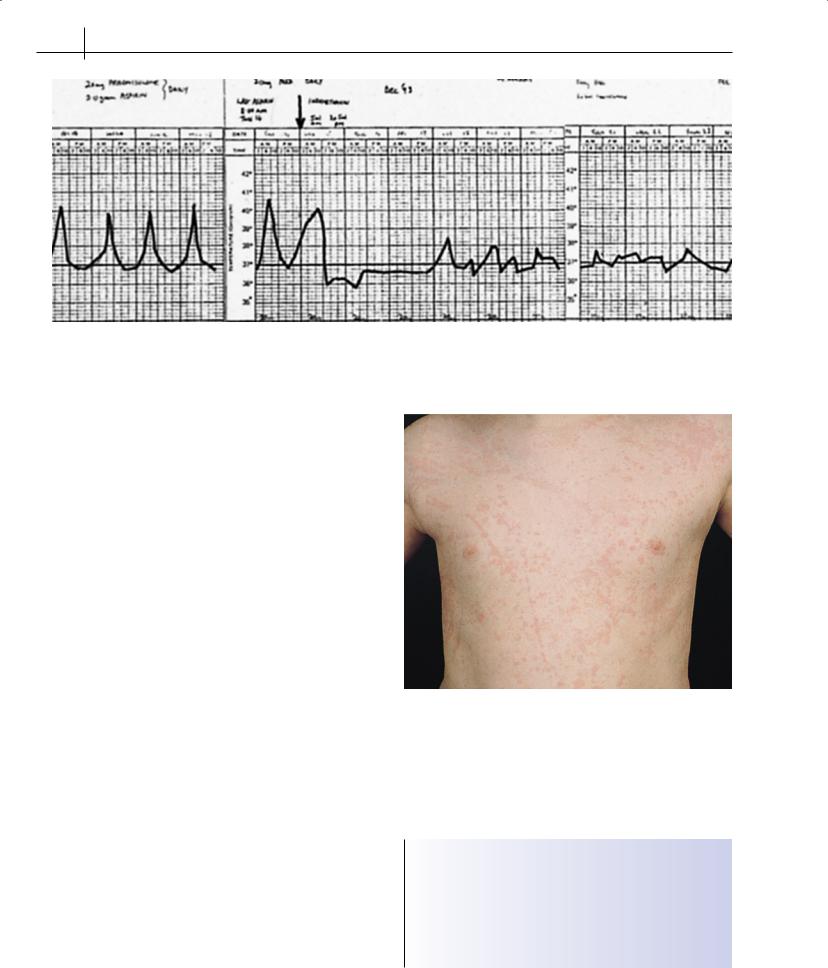
Figure 15.7 Temperature chart showing characteristic quotidian fever of systemic arthritis
Systemic arthritis
Systemic arthritis usually begins in early childhood (although it can occur at any age through to adulthood), with prominent extraarticular features of high quotidian fevers (Figure 15.7), rash (Figure 15.8), myalgia, arthralgia and irritability (Box 15.7). Laboratory studies show elevated WBC count, severe anaemia, thrombocytosis, high ESR, CRP, ferritin and positive d-dimers or fibrin split products. The systemic features usually resolve after a few months but may last indefinitely. The pattern of arthritis is variable, ranging from several swollen joints to a widespread polyarticular pattern that can be very difficult to control. These children have the worst prognosis of all, not only regarding erosions and loss of joint motion but also because of severe growth delay and sequalea of chronic corticosteroid use. Macrophage activation syndrome has been associated with systemic arthritis and carries a 10–15% mortality rate. Treatment with intravenous corticosteroids and cyclosporine is usually successful in reversing rapid deterioration and disseminated intravascular coagulation.
Oligoarthritis—persistent
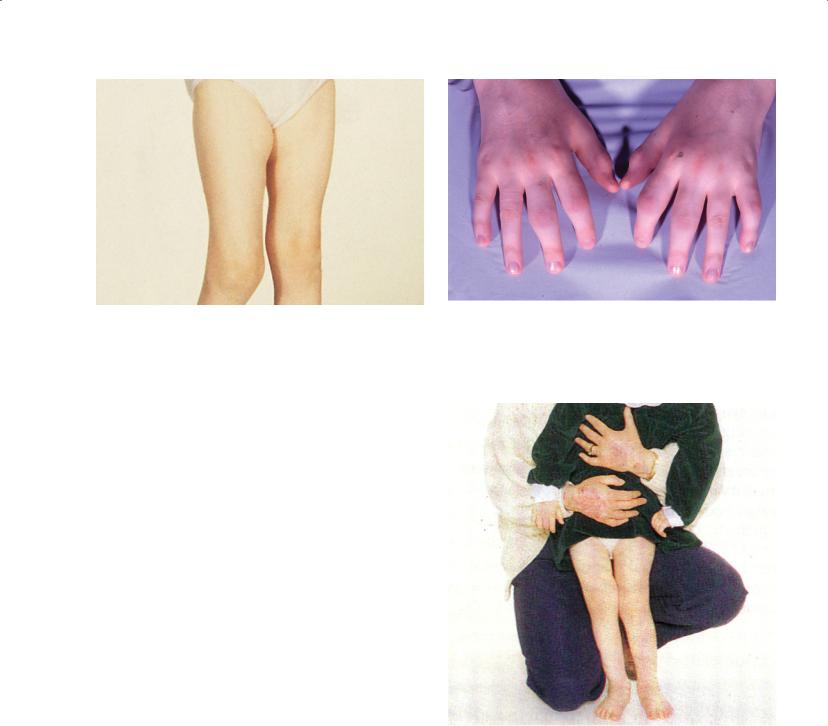
The most common condition under the rubric of JIA, oligoarthritis accounts for over half of all cases of JIA. It mainly affects preschool girls, with a sex ratio of 5:1. The knee is the most frequently affected joint, followed by ankle and wrist (Figure 15.9). The hip is almost never affected. This group of otherwise healthy little girls is at the highest risk for the development of chronic asymptomatic anterior uveitis (20%). Chronic anterior uveitis is clinically silent and insidiously progressive; it produces visual loss and blindness if not detected by slit lamp examination and treated early (with recommended monitoring every 3 months). It is frequently associated with positive ANAs, but all other laboratory investigations are normal. Investigations have identified a complex genetic predisposition to both oligoarthritis and uveitis. Localized growth disturbances are common; the affected leg grows longer (presumably as a result of chronic hyperaemia and increased blood supply to the
Figure 15.8 Typical erythematous and evanescent rash of systemic arthritis. Frequently, the rash is obvious only at the height of the fever and sometimes is confined to the axillary region, anterior chest wall and inside both thighs
Box 15.7 Extra-articular features of systemic arthritis
•Characteristic daily fever
•Evanescent erythematous maculopapular rash
•Hepatomegaly
•Splenomegaly
•Lymphadenopathy
•Serositis
Juvenile Idiopathic Arthritis |
93 |
|
|
|
|
Figure 15.9 Oligoarthritis, persistent, in a 3-year-old girl |
Figure 15.10 Symmetric arthritis in a young child with polyarthritis, |
|
negative for rheumatoid factor |
||
|
inflamed area, resulting in leg length discrepancy) contributing to knee flexion contracture and atrophy of the muscle above the knee. The typical stance of a toddler with oligoarthritis is with the swollen knee bent and the other one straight.
Oligoarthritis—extended
One-third of children with oligoarthritis whose disease during the first 6 months affects less than four joints continue to develop arthritis in further joints thereafter; hence the nomenclature “extended.” Many of these children have anterior uveitis. These patients have a different immunogenetic background than patients with persistent oligoarthritis and carry a prognosis similar to those with polyarthritis.
Polyarthritis—rheumatoid-factor negative
Polyarthritis accounts for 25–30% of children with JIA and usually affects preschool girls with a predominantly symmetrical arthritis of upper and lower limbs. Chronic anterior uveitis and growth disturbance are important but rare potential complications. This illness lasts most of childhood, and many children go into adulthood with active disease. These children have mild anaemia and usually positive ANAs. ESR and CRP may be mildly elevated.
Polyarthritis—rheumatoid-factor positive
This condition is similar in features and prognosis to adult RA and the only one deserving the name JRA. It affects girls primarily and usually presents in late childhood or adolescence. It affects less than 5% of patients with JIA and can be rapidly progressive and destructive. Rheumatoid nodules are common and failure to thrive more frequent than in seronegative polyarthritis. ANAs are usually positive (Figure 15.10).
Psoriatic arthritis
Arthritis may pre-date the onset of the classical skin findings of psoriasis by many years and is not required for the diagnosis in a
Figure 15.11 Psoriatic arthritis without rash in a child whose mother has psoriasis
child. The pattern of articular involvement in psoriatic arthritis is often asymmetrical, and tends to affects both small and large joints in a similar pattern to extended oligoarthritis, except for the presence of characteristic extra-articular features of psoriasis in a first-degree relative. Family history of a first-degree relative with psoriasis establishes the diagnosis. Asymptomatic uveitis with the same risk of blindness as in oligoarthritis affects many children, although the exact incidence is not known. These children should have a slit lamp evaluation every 3 months (Figure 15.11).

94 ABC of Rheumatology
Enthesitis-related arthritis
ERA, or related conditions under the umbrella of JIA, typically begins after the age of 6 years and affects boys more often than girls. It is characterized initially by lower limb arthritis often complicated by enthesitis (inflammation of the point where tendon, ligament or fascia inserts into bone). The most common sites of enthesitis are at the insertions of plantar fascia (calcaneum, the base of the fifth metatarsal and the metatarsal heads), the insertion of the Achilles tendon into the calcaneum, and around and below the patella. Symptoms of sacroiliitis and spinal arthritis are uncommon at presentation. Although it may be a precursor illness to ankylosing spondylitis (AS), it is not known how many children with ERA progress to AS during their adult years. Uveitis affects these patients as well, but it tends to be symptomatic, presenting with red eyes, photophobia and pain. Some adolescent boys also complain of urethritis. A family history of similarly affected relatives is often positive, and HLA-B27 antigen may be found in 50% of patients, while ANA is usually negative.
Treatment
General principles
The aim of therapy is to maintain the child’s or adolescent’s quality of life while preserving joint function for as long as the disease is active. It helps to keep in mind that humans are living longer, and thus depending longer on the preservation of joint integrity. Second only to early recognition and referral, aggressive medical approach and timely physical interventions are of paramount importance. Whenever possible, the care of a child with JIA should be provided by an efficient, multidisciplinary team, a microsystem that prides itself on patient education and outreach (Boxes 15.8 and 15.9). The team should be led by a paediatric
Box 15.8 Members of the local community-based care team
•Primary care provider; the patient’s general practitioner
•Rheumatologist
•Paediatrician
•Community rehabilitation and support staff
•School nurse
•Special education instructor
•Counsellor
Box 15.9 Members of the paediatric rheumatology care team
•Paediatric rheumatologist
•Paediatric nurse clinician
•Paediatric physiotherapist
•Paediatric occupational therapist
•Social worker
•Psychologist, parent liaison, nutritionist
rheumatologist working in tandem with a team of people who are expert in the specifics of paediatric rehabilitation, disease education, clinical and drug monitoring, the ethical conduct of clinical trials, school advocacy, nutrition, family and social support, and psychology. In addition, the need for ready access to other paediatric specialties, such as ophthalmology, orthopaedics, maxillofacial surgery, psychiatry, nephrology, infectious disease and dermatology, underscores the complexity of optimal management required for these children. Lastly, to fully maximize quality of care, the paediatric rheumatologist should be a member of one of the established networks of paediatric rheumatology professionals (clinicians including allied health professionals, scientists and all trainees), who collaborate in clinical trials augmented and enriched by translational research (such as the paediatric rheumatology international trials organization in Europe (PRINTO) and childhood arthritis and rheumatology research alliance (CARRA in the USA and Canada).
Hospital admission is often considered in European centres, intended for efficient initial investigation and team assessment of all patients with arthritis, particularly if they are significantly disa bled or have prominent systemic features. In the USA, however, most children with arthritis, including JIA, are managed in outpatient settings, by paediatric rheumatologists heading up a painstakingly assembled multidisciplinary team. Most often, this team becomes a well-respected component of a clinical network employed within a tertiary referral structure (including children’s hospitals and large academic, university-affiliated medical institutions), managing children with complex and chronic inflammatory diseases and evaluating youngsters with symptoms that prove too challenging for their primary care physicians. Ideally, this tertiary team communicates well with the local team led by the primary care provider, or school nurse, or physioand occupational therapists, working in a variety of community settings. Computerized systems of care will ease communication among different providers.
Drug treatment of JIA usually starts with oral non-steroidal antiinflammatory drugs (NSAIDs). However, most patients need better control than can be accomplished with NSAIDs alone. Within 4–12 weeks, slow-acting antirheumatic drugs such as methotrexate or sulfasalazine, can be considered if signs of inflammation persist even without disability (Table 15.3). Seventy per cent of children with polyarthritis improve (much fewer with systemic arthritis do so), but many continue to have radiologic progression and risk a lifetime of disability and decreased productivity. The addition of one of the new biologic agents, such as anti-tumour necrosis factor alpha (TNF-α) receptors and monoclonal antibodies, is considered quite early in the USA, especially in children threatened with long-term disability from both chronicity and aggressiveness of their inflammatory synovitis (as documented in children with polyarthritis, systemic arthritis and psoriatic arthritis). The use of these agents has revolutionized the approach to potentially disabling arthritis in both adults and children, and the resulting outcomes have dramatically altered natural history and stopped progression of disease in thousands of patients. No longer are children with JIA kept in strollers or wheelchairs. If the experience of the last 10 years holds, prognosis is now excellent for

Juvenile Idiopathic Arthritis |
95 |
|
|
|
|
Table 15.3 Drug treatment
Non-steroidal anti-inflammatory drugs
Ibuprofen 10 mg/kg/dose four times a day
Piroxicam 0.2–0.3 mg/kg/dose once a day
Naproxen 10 mg/kg/dose twice a day
Intra-articular corticosteroids
Triamcinolone hexacetonide
1 mg/kg/joint for large joints
0.5 mg/kg/joint for medium joints
1–2.5 mg/joint for digits
Triamcinolone acetonide
2 mg/kg/joint for large joints
1 mg/kg/joint for medium joints
2–4 mg/joint for digits
Methotrexate*
0.3–1 mg/kg/dose once weekly orally or subcutaneously
Sulfasalazine*
25 mg/kg/dose twice daily
Etanercept*
0.4 mg/kg/dose twice weekly or 0.8 mg/kg once weekly, both subcutaneously
Parenteral corticosteroids
Methylprednisolone 10–30 mg/kg/dose daily over 1–3 days Prednisolone 0.2–2 mg/kg/dose once a day
*Need regular monitoring with blood counts, chemistry and metabolic tests and urinalysis
children with arthritis who have access to the latest therapies. Repeat intra-articular therapy and periods of intensive rehabilitation may still be needed for truly recalcitrant arthritis, but most children, particularly in the USA, where access to these new and expensive biologics is not restricted, face an increasingly positive future.
Whereas in the past ongoing physiotherapy services were required components of high-quality management, viewed as important as medical treatment, this is no longer the case. Children diagnosed and treated during the biologic era avoid ravages of chronic inflammation because biologic agents rapidly resolve stiffness and pain, allowing uninterrupted joint motion and muscle strength, thus preventing scarring, atrophy, asymmetric growth and subsequent reliance on assistive devices. The role of physiotherapists now is to keep children with arthritis strong
and flexible, engaged in regular exercise and open to a healthy lifestyle.
As with all chronic treatment, the issue of non-compliance is of particular importance in children and adolescents. Drugs that need to be given more than twice daily or taste badly should be avoided, if possible. School absence (and associated loss of work by parents) ought to be minimized and physical education classes adjusted to the student’s physical tolerance. Great care should be given to minimizing pain associated with repeated injections. Meticulous attention to detail and routine utilization of health-related quality- of-life measures work synergistically to manage complications and prevent progression, resulting in high quality of care and improved outcomes.
Non-steroidal anti-inflammatory drugs
Treatment of children with arthritis usually begins with NSAIDs. These are used in higher doses, relative to body weight, than in adults because children have increased rates of metabolism and renal excretion. An individual NSAID, if free of significant adverse effects, could be continued for 4–8 weeks before a judgement about efficacy is made and the treatment is escalated. Adverse effects include abdominal pain (usually minimized by taking the NSAID with food and treated successfully with ranitidine, omeprazole or misoprostol), change in mood (usually transient) and rarely, bronchospasm (mild asthma is not a contraindication to the use of NSAIDs in children). Naproxen has the additional side effect of inducing pseudo-porphyria, particularly in children with reddishblonde hair and fair complexions.
Selective COX-2 inhibitors were tested in paediatric trials and found as effective and safe as the widely used traditional NSAIDs. However, only one, celecoxib, is labelled for use in children with arthritis, owing to increased incidence of myocardial infarction in adults. Cessation of NSAIDs may be considered if the patient has been free of active disease for at least 6 months. The majority of patients with early JIA do not respond completely to NSAIDs and need more aggressive treatment. In children with single joint involvement, an intra-articular corticosteroid with a long half-life is often recommended after 6 weeks.
Corticosteroids
Intra-articular preparations are the most frequently used form of corticosteroids in JIA. Triamcinolone hexacetonide has the highest efficacy and longest duration of action, although drug supplies are unreliable and at times limited within the UK and the USA. In children with oligoarthritis, intra-articular injections have largely replaced other interventions, including NSAIDs. A single injection usually resolves all signs of inflammation for several months. In the UK, intra-articular medication in children is usually given under general anaesthesia and multiple injections are common, whereas in the USA, where usually no more than one or two joints are injected, local anaesthetic is acceptable for most children.
Systemic steroids must be avoided if possible, because of a nearly unacceptable range of adverse effects, including growth and immune suppression, cataract formation, diabetes, avascular necrosis of bone, vertebral collapse and the horrible and

96 ABC of Rheumatology
predictable physical changes of Cushing’s stigmata, in virtually all patients. In some situations, however, large pulses of intravenous methylprednisolone help gain control of active and devastating features of systemic arthritis and may be lifesaving in the face of significant pericarditis with tamponade or rapidly progressive macrophage activation syndrome.
The use of oral prednisolone is limited to low-dose, preferably alternate-day administration, for children with severe polyarthritis or systemic arthritis who are unable to function in school or the community despite having taken all available steroid-sparing medications. “Steroid-sparing agents” refers to aggressive interventions, including chemotherapy, biologics and stem-cell replacement, which should only be tried by experts in childhood rheumatic diseases.
Short stature, a common and severe sequel of poorly controlled systemic arthritis, may be treated with daily injections of growth hormone. Most children, as reported in several studies, have a statistically improved rate of growth while receiving growth hormone and seem to achieve higher ultimate height. Similarly, and often in addition to the above, short stature associated with chronic corticosteroid use also improves after the addition of growth hormone and appears well tolerated.
Slow-acting antirheumatic drugs
Methotrexate—Methotrexate is effective in approximately 70% of children with polyarthritis but much less in systemic arthritis. It should be considered for any child whose arthritis is not well controlled with a trail of NSAIDs and intra-articular steroids, alone, after 4–12 weeks. Initial doses of 0.3–0.5 mg/kg of methotrexate are usually given by mouth once a week (recommended 1 hour before food to improve absorption). For recalcitrant disease, subcutaneous methotrexate provides serum levels up to 40% higher than the oral route. Once methotrexate is started, efficacy may be determined after 1–3 months.
The most common adverse events associated with methotrexate are nausea, followed by mouth sores. Subcutaneous administration may be less of a problem in this regard than oral administration. Oral folate supplements or ondansetron may be helpful, and leucovorin rescue is often used if symptoms persist after 24 hours. Other side effects include abdominal pain; elevated liver enzymes; and rarely, hair loss and bone-marrow suppression. Patients taking methotrexate must have blood monitoring on a monthly basis to screen for abnormal liver function and bone-marrow suppression. Adolescents must refrain from drinking alcohol.
Recent trials with leflunomide have shown the same efficacy and less toxicity in children taking leflunomide than methotrexate. While very similar to methotrexate in mode of action, leflunomide seems better tolerated, particularly by patients who develop some of the more recalcitrant side effects (such as nausea before the drug is even administered) (Silverman et al., 2005).
Sulfasalazine—Sulfasalazine has been shown to be efficacious in oligoarthritis and polyarthritis, but seems particularly effective in ERA. It is usually well tolerated, but an erythematous rash may be an adverse event. There are rare reports of aplastic anaemia. The usual doses of 2–4 g per day are divided into two doses. It is not of
value in systemic arthritis, with a poor clinical response and an increased incidence of side effects such as macrophage activation syndrome.
Biologic agents
Currently three TNF antagonists exist, and two have been studied well in children: etanercept and infliximab. Adalimumab, a fully humanized monoclonal antibody to TNF, is also available. There remain significant long-term concerns relating to the unknown effects of these agents, particularly in young children. Many years of practice are needed to identify potential disruption of immune surveillance in children; however, to date with over 10 years and millions of prescriptions worldwide, experience has been overwhelmingly positive.
Etanercept—Therapy with this anti-TNF-α receptor is approved for the treatment of children with JIA whose disease is not adequately controlled with methotrexate or who are intolerant of it. Large multicentre trials showed that children with severe, meth- otrexate-resistant polyarthritis demonstrated sustained clinical improvement with more than 2 years of continuous etanercept treatment. Etanercept was generally well tolerated, and there were no increases in the rates of adverse events over time (Lovell et al., 2003). Etanercept may be initiated if methotrexate fails to control signs of inflammation or if there are unacceptable adverse drug reactions. Regular (1–2 month) monitoring of blood counts and chemistry studies is recommended. Etanercept should be discontinued in the event of fever or other signs of significant infection. Methotrexate is often discontinued when etanercept is started, but may be continued indefinitely after initiation of etanercept if it is well tolerated. Combinations of medical interventions appear to have the best long-term outcome.
Infliximab—Infliximab is a biologic agent developed for the treatment of RA in adults and is a chimeric monoclonal antibody against TNF-α. It is highly effective but not yet labelled for use in JIA. It is approved for use in childhood Crohn’s disease and being increasingly used for children with JIA who fail etanercept or have associated uveitis. In adults, infliximab is now approved for treatment of seronegative spondyloarthropathies. It is used in combination with methotrexate to minimize the risk of immune reactions. A dose of 5 mg/kg/dose is usually associated with improvement in the majority of children. Reactions are common and infusions should be done in paediatric settings where staff is experienced in handling intravenous infusions.
Other drugs
Hydroxychloroquine—Hydroxychloroquine is a relatively safe antimalarial drug that has been used widely in adults with RA, mostly as adjunctive therapy. Studies in children do not support its use in JIA, and the availability of successful interventions has largely superseded its use. It does show efficacy in RA and thus is still advocated for adolescents with RF-positive polyarthritis.
Cyclosporin A—Cyclosporin A is a Il-2 inhibitor that targets T-cells and is used (with falling frequency and in combination with meth-