Материал: ABC-of-Rheumatology-ABC-Series-

CHAPTER 26
Epidemiology of the Rheumatic Diseases
Alan Silman and Jacqueline Oliver
Arthritis Research Campaign, Chesterfield, UK
OVERVIEW
•Rheumatoid arthritis affects 0.8% of the population and has definite genetic and lifestyle risk factors.
•Osteoarthritis is the commonest arthritic complaint; although age is the key risk factor, both genetic and lifestyle risks are implicated.
•Musculoskeletal pain syndromes are almost universal in the population, but accurately documenting their occurrence is difficult.
•Mechanical factors are important for most musculoskeletal pain syndromes.
•Other autoimmune rheumatic diseases are much less common but affect younger age groups.
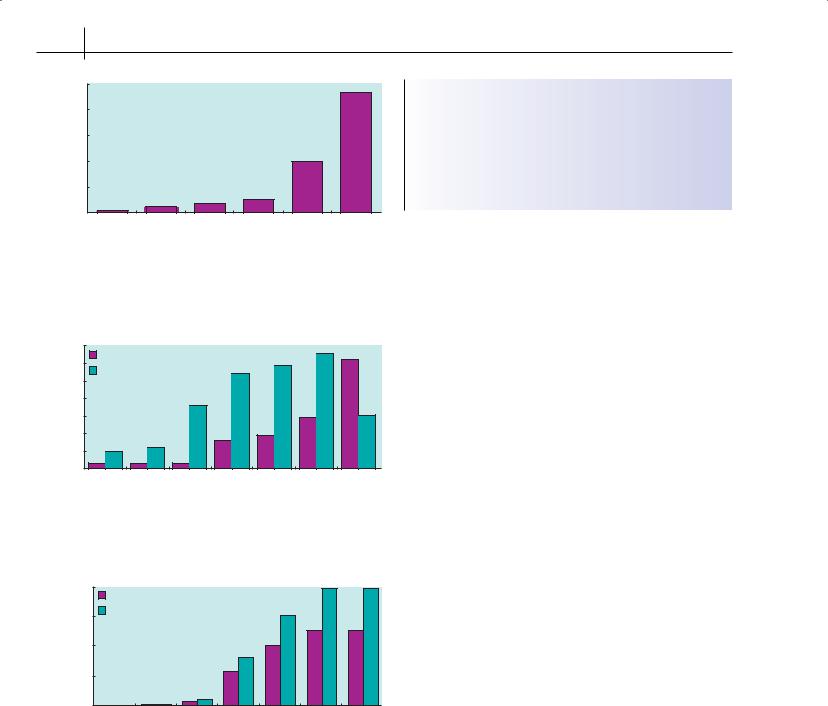
Musculoskeletal diseases account for around 10% of general practitioner (GP) consultations in the UK each year. The most common diseases are osteoarthritis (OA) and low back pain (LBP) (Figure 26.1). These diseases generally are more common in women than men and increase with age. It is estimated that the proportion of over 65s in the population will increase 3-fold in the next 30 years, increasing the burden on health-care systems from musculoskeletal disorders.
Rheumatoid arthritis
Rheumatoid arthritis (RA) is estimated to have a prevalence of around 0.8% of the adult population. It is three times more likely to occur in women than men (Figure 26.2). However, estimates are considerably higher in some populations and a prevalence of 6.8% has been recorded in some Native American populations. The disease most commonly presents in the sixth and seventh decades.
A number of genetic and environmental factors have been linked with the risk of developing RA (Box 26.1). Some factors increase the risk, whereas others are thought to offer a protective role in
ABC of Rheumatology, 4th edn. Edited by Ade Adebajo. ©2010 Blackwell Publishing Ltd. 9781405170680.
disease development. Data from national twin studies have shown that the heritability of RA is around 60%. This source of the genetic component has been extensively investigated, and links to genes encoding HLA-DRB1 alleles are well established. Other genes, albeit with weaker effects, have also been identified, and with the increasing use of whole genome screens it is likely that more candidate genes will be discovered in future.
Several studies have implicated hormonal factors in RA, although the results have been conflicting. The higher incidence in women may suggest a hormonal influence on disease onset. A consistent finding is that current or ever use of the oral contraceptive pill has a protective role. RA onset is also reduced by 70% during pregnancy, but there is a 5-fold increased risk in the post-partum period.
Socio-economic factors have not been consistently associated with RA, but several lifestyle factors have been associated with the disease. Cigarette smoking has been the subject of many studies, and one study reported that the risk of RA was increased 3-fold for males who smoke. Heavy smoking (increased risk of over 13-fold) and passive smoking have also been linked with RA, while the cessation of smoking has been shown to reduce the risk of RA. Dietary factors are an increasing area of interest for epidemiological studies. Low fruit and vitamin C intake and high red meat intake have both been linked with a 2-fold increased risk of RA. High intakes of antioxidants (β-cryptoxanthin and zeaxanthin) found in some fruits and vegetables may reduce the risk. The benefits of following a Mediterranean diet (high proportion of oily fish and vegetables) may confer a protective role. The role of caffeine intake on RA is not yet clear, and studies so far have produced mixed results. Infectious agents have been implicated as a risk factor for RA. Both pet ownership and prior blood transfusion have been shown to
Box 26.1 Risk factors for rheumatoid arthritis
•Age
•Gender (more common in women)
•Genetic factors
•Infectious agents
•Hormonal factors
•Lifestyle factors
167
168 |
ABC of Rheumatology |
|
|
|
|||
|
500 |
|
|
|
|
|
|
|
400 |
|
|
|
|
|
|
Rate/10,000 |
300 |
|
|
|
|
|
|
200 |
|
|
|
|
|
|
|
|
|
|
|
|
|
|
|
|
100 |
|
|
|
|
|
|
|
0 |
AS |
PMR |
RA & IP |
Gout |
OA |
Back |
|
|
||||||
Musculosketal condition
Figure 26.1 GP consultation for major musculoskeletal conditions in 2006. AS = ankylosing spondylitis; IP = inflammatory polyarthritis; OA = osteoarthritis; PMR = polymyalgia rheumatica; RA = rheumatoid arthritis
|
70 |
|
|
|
|
|
|
|
Males |
|
|
|
|
|
|
|
60 |
|
|
|
|
|
|
Incidence/100,000 |
Females |
|
|
|
|
|
|
50 |
|
|
|
|
|
|
|
|
|
|
|
|
|
|
|
|
40 |
|
|
|
|
|
|
|
30 |
|
|
|
|
|
|
|
20 |
|
|
|
|
|
|
|
10 |
|
|
|
|
|
|
|
0 |
25–34 |
35–44 |
45–54 |
55–64 |
65–74 |
75–84 |
|
15–24 |
||||||
|
|
|
|
Age group |
|
|
|
Figure 26.2 Incidence of rheumatoid arthritis by age and gender in Norfolk, UK
years |
1600 |
|
|
|
|
|
|
Females |
|
|
|
|
|
|
|
|
Males |
|
|
|
|
|
|
person |
1200 |
|
|
|
|
|
|
800 |
|
|
|
|
|
|
|
Rate/10,000 |
|
|
|
|
|
|
|
400 |
|
|
|
|
|
|
|
|
|
|
|
|
|
|
|
|
0 |
16–24 |
25–44 |
45–64 |
65–74 |
75–84 |
85+ |
|
0–15 |
||||||
|
|
|
|
Age group |
|
|
|
Figure 26.3 Prevalence of osteoarthritis by age and gender
increase the risk of RA 5-fold. There is an association between Epstein–Barr virus and RA—an observation that has been recognized for over 25 years, although its role in the causation is not clear.
Osteoarthritis
OA is the most common form of arthritis and a leading cause of disability. The prevalence is around 10–20% in people aged over 65 years (Figure 26.3). OA is more common in women than men and is age-dependent, being uncommon in those under 40 years. Each
Box 26.2 Risk factors for osteoarthritis
•Genetic factors/family history
•Obesity
•Gender (more common in women)
•Age
•Joint injury
•Occupation
year it is estimated that over 2 million people in the UK visit their GP with OA symptoms. The site most frequently affected is the knee, although the hip and hand are also commonly affected. Hip OA is less common but is more disabling than knee OA.
A number of risk factors are associated with OA, of which the strongest is age (Box 26.2). Genetic factors are important, and OA in some families displays classical Mendelian inheritance. The heritability of cartilage volume, as a marker of degeneration, has been estimated at over 70%. Congenital joint deformities may increase the stress on the cartilage and contribute to OA development. The increase of obesity in the population is one of the major factors associated with both the development of knee OA and with the progression of the disease. Having a high body mass index has been associated with an up to 9-fold increased risk of knee OA. Joint injury can also increase the risk of OA. This may be due to direct cartilage damage or a result of increased stress on the cartilage due to the injury. Certain occupations are at an increased risk, e.g. jobs that have excessive knee-bending and farming. Factors that affect the progression of OA are also increasingly being studied. Recent studies have shown that a low vitamin D intake can increase the risk of OA, and a high vitamin C intake may reduce the risk.
Musculoskeletal pain
Most patients presenting with musculoskeletal pain do not have a definite arthritis such as RA or OA. The most commonly reported causes of musculoskeletal pain are LBP, shoulder pain and fibromyalgia/chronic widespread pain (CWP). Estimates of the occurrence of musculoskeletal pain vary widely. It is difficult to gain robust estimates due to the episodic nature of most musculoskeletal pain syndromes; the onset of pain is not always clearly defined and is subject to recall bias.
Low back pain
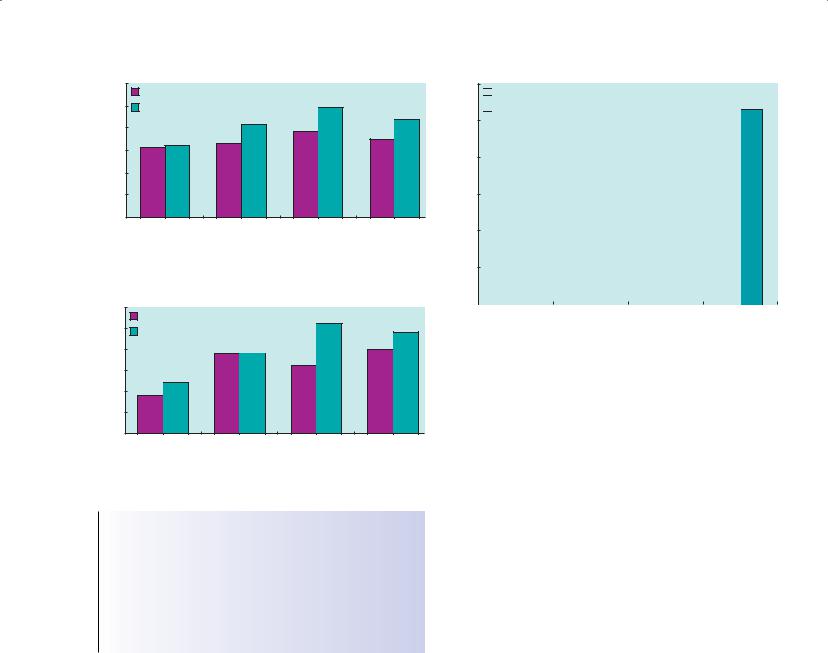
LBP is common, and at least 50% of the general population will report an episode of LBP in their lifetime. A recent study estimated that the prevalence of LBP has tripled in men and doubled in women over the past 40 years. LBP is generally more common in women and the prevalence increases with age (Figure 26.4). A number of risk factors are implicated with LBP, including poor posture, occupation, poor job satisfaction, smoking, obesity, previous LBP episode and low social class (Box 26.3). In both men and women as the number of children increases so does their risk of LBP.
Epidemiology of the Rheumatic Diseases |
169 |
|
|
|
|
|
60 |
Males |
|
|
|
|
|
|
|
|
|
|
50 |
Females |
|
|
|
Percentage |
40 |
|
|
|
|
30 |
|
|
|
|
|
|
|
|
|
|
|
|
20 |
|
|
|
|
|
10 |
|
|
|
|
|
0 |
18–29 |
30–44 |
45–59 |
60+ |
|
|
||||
|
|
|
Age group |
|
|
Figure 26.4 One month prevalence of back pain by age and gender |
|||||
|
30 |
Males |
|
|
|
|
|
|
|
|
|
|
25 |
Females |
|
|
|
% |
20 |
|
|
|
|
Prevalence |
|
|
|
|
|
15 |
|
|
|
|
|
|
|
|
|
|
|
|
10 |
|
|
|
|
|
5 |
|
|
|
|
|
0 |
16–44 |
45–64 |
65–74 |
75+ |
|
|
||||
|
|
|
Age |
|
|
Figure 26.5 Prevalence of shoulder pain
Box 26.3 Risk factors for low back pain
•Age
•Number of children
•Previous episode of low back pain
•Obesity
•Smoking
•Fitness
•Occupation (heavy lifting, prolonged sitting)
Shoulder pain
Up to one-third of the population will report an episode of shoulder pain at some time. Reported rates are dependent on how shoulder pain is classified (i.e. what is the shoulder?) and how the data are collected. Population studies based on self-reported symptoms estimate shoulder pain prevalence is between 20 and 40%. A recent study estimated that the prevalence of shoulder pain has doubled in men and quadrupled in women over the past 40 years. The number of patients who consult their GPs with shoulder pain increases with age (Figure 26.5) and is generally higher in women than men.
Risk factors for shoulder pain include social class and mechanical and psychosocial factors. Workplace risk factors for men developing shoulder pain include carrying weights, damp and cold working environment, working with hands above shoulder level or stretching below knee level and using arms or wrists in a repetitive manner. Performing monotonous work has been associated with a 3-fold increased risk of shoulder pain in both sexes.
12

 Males
Males

 Females
10
|
8 |
|
|
|
|
|
|
|
|
|
|
|
|
|
% |
6 |
|
|
|
|
|
|
|
|
|
|
|
|
|
|
|
|
|
|
|
|
|
|
|
|
|
|
||
|
4 |
|
|
|
|
|
|
|
|
|
|
|
|
|
|
|
|
|
|
|
|
|
|
|
|
|
|
|
|
|
2 |
|
|
|
|
|
|
|
|
|
|
|
|
|
|
|
|
|
|
|
|
|
|
|
|
|
|
|
|
|
|
|
|
|
|
|
|
|
|
|
|
|
|
|
|
|
|
|
|
|
|
|
|
|
|
|
|
||
|
0 |
|
|
|
|
|
|
|
|
|
|
|
|
|
|
|
|
|
|
|
|
|
|
|
|
|
|
|
|
|
|
18–30 |
|
31–40 |
|
41–50 |
|
51–65 |
|
|||||
|
|
|
|
|
|
|
||||||||
Age group (years)
Figure 26.6 Prevalence of chronic widespread pain by age and gender
Fibromyalgia/chronic widespread pain
CWP, defined as both axial and limb pain affecting both upper and lower limbs on both sides of the body, is more common in women and is more likely to develop with increasing age (Figure 26.6). The prevalence estimates for CWP are consistent, between 11 and 14%. CWP has been reported more frequently in South Asian women. There is some evidence that patients with depressive symptoms are at an increased risk of developing CWP. Subjects with an increased tendency to visit their GP were found to be nine times more likely to develop CWP. The fibromyalgia syndrome (CWP plus widespread tender points) has a prevalence of between 1 and 11%, the variation being due to the method of ascertainment.
Other rheumatic diseases
The incidence of some of the other rheumatic diseases seen in rheumatological practice is summarized in Table 26.1.
Ankylosing spondylitis—Ankylosing spondylitis (AS) is three times more common in males than females, and peak onset is between 20 and 40 years of age. Prevalence is around 0.5–2.0/1000 in European populations. It is relatively rare in some African and Japanese populations but more frequent in Native Americans, with a prevalence of 6% reported in Haida and Bella Indians. The causes of the disease are still unknown, although a strong link with HLAB27 has been established, with the frequency of the gene in white AS patients at around 90%. There is an increased risk of the disease in relatives of probands, and results of twin studies show concordance rates of 50–75% in monozygotic twins. Infection may play a part in the disease, but the data are conflicting despite several decades of study.
Psoriatic arthritis—Psoriatic arthritis (PsA) has a prevalence of around 0.1–0.2%, and there is little difference in the rate between genders or age bands. Risk factors for the disease include family history, and there is some evidence that the disease is linked to HLA alleles. There are also a number of environmental triggers associated with PsA. The disease is known to start after HIV

170 ABC of Rheumatology
Table 26.1 Incidence by gender of the major rheumatic and autoimmune diseases
|
Incidence/100,000 |
Sex ratio (M : F) |
|||
|
|
|
|
|
|
|
Men |
Women |
|
|
|
|
|
|
|
||
|
|
|
|
|
|
Rheumatoid arthritis |
14 |
36 |
1 |
: 3 |
|
Psoriatic arthritis |
3.5 |
3.4 |
1 |
: 1 |
|
Ankylosing spondylitis |
11.7 |
2.9 |
3 |
: 1 |
|
Systemic lupus |
0.5 |
6.8 |
1 |
: 8 |
|
erythematosus |
|
|
|
|
|
Scleroderma* |
1.1 |
6.2 |
1 |
: 8 |
|
Polymyalgia rheumatica |
40 |
62 |
1 |
: 2–3 |
|
Giant cell arteritis |
8 |
27 |
1 |
: 2–3 |
|
Gout** |
190 |
70 |
3 |
: 1 |
|
*/million
**Varies widely between different populations
infection, and prior trauma has also been associated with disease onset.
Systemic lupus erythematosus—Systemic lupus erythematosus (SLE) has a prevalence of between 10 and 250/100,000. It is more common in women than men, with on onset between 35 and 50 years of age. It is noticeably higher in African American, Asian and Afro-Caribbean populations than in white populations. There is strong evidence for a genetic cause for the disease, and first-degree relatives of patients are at an up to 9-fold increased risk of disease development. Twin studies also show a high concordance rate, supporting a genetic contribution for the disease. Associations with HLA have been reported, but these vary between populations. Despite the high female excess, so far no hormonal link to the disease has been found, and there is limited support for environmental risk factors, although infectious agents and chemical exposure have all been studied.
Scleroderma—Scleroderma is a rare disease; it usually presents between the ages of 35 and 55, with an up to 8-fold female excess. Population prevalence studies estimate the prevalence of scleroderma to be between 30 and 1130/million—the wide variation is due to the lack of population studies, as the disease is rare. There is some evidence suggesting that the disease has a higher incidence in black African populations. So far only a weak association between HLA and scleroderma has been found, although stronger links have been found with specific autoantibodies
(anti-topoisomerase and anti-centromere antibodies). A number of environmental triggers are thought to be risk factors for the disease. Exposure to silica dust (stone masons and gold miners) has been linked with the disease but there is no evidence that silicone implants increase the disease risk. Exposure to organic solvents has been linked to an increased risk of scleroderma, and there is some evidence from case reports that specific drugs may be linked with the disease.
Gout—Gout is more common in men (around 1–2%) than women (around 0.2–0.5%). The prevalence varies in different populations. Extremely high rates are found in Polynesians (up to 10% in New Zealand Maori males), whereas gout is rarely found in African populations. Two recent studies in the USA and New Zealand suggest that the incidence of gout has increased 2-fold over the past 30 years. The main susceptibility factor for gout is hyperuricaemia. Risk factors for hyperuricaemia include obesity, hypertension, alcohol consumption, diet and some genetic factors.
Polymyalgia rheumatica and giant cell arteritis—Polymyalgia rheumatica (PMR) and giant cell arteritis (GCA) are related disorders that usually present in the over 50s. Prevalence over the age of 50 is between 0.2 and 2.2/1000 for GCA and 5.5 and 10.9/1000 for PMR. Both diseases are more common (2- to 3-fold higher) in women than men. Both diseases increase with age, peaking at around 70 years with a decline after that. There is some evidence that there is a genetic link for HLA alleles and PMR/GCA, but results have not been consistent in different populations. Reports suggest that both diseases may be seasonal in incidence, but again the results have been inconsistent. There are a number of reports that suggest infectious agents as a risk factor for these diseases, and peak incidences have followed outbreaks of Mycoplasma pneumoniae, human parvovirus B19 and Chlamydia pneumoniae.
Further reading
McBeth J, Jones K. Epidemiology of chronic musculoskeletal pain. Best Practice and Research. Clinical Rheumatology 2007; 21: 403–425.
Oliver JE, Silman AJ. Risk factors for the development of rheumatoid arthritis. Scandinavian Journal of Rheumatology 2006; 35: 169–174.
Royal College of General Practitioners/Birmingham Research Unit. Annual Prevalence Report 2006. Available online at: http://www.rcgp.org.uk/pdf/ Annual%20prevalence%20report%202006.pdf
Sharma L, Kapoor D, Issa S. Epidemiology of osteoarthritis: an update.
Current Opinion in Rheumatology 2006; 18: 147–156.
Silman AJ, Hochberg MC. Epidemiology of the Rheumatic Diseases, 2nd edn. Oxford University Press, Oxford, 2001.

Index
abatacept |
78 |
|
|
|
|
avascular necrosis 30 |
|
|
CATS (clinical assessment and treatment |
||||||||
acetabular labrum, tears 31 |
|
azathioprine 77, 154 |
|
|
services) |
163 |
|
|
|
||||||||
Achilles tendon affections |
42, 80–1 |
|
|
|
|
|
|
cauda equina syndrome |
22, 25 |
||||||||
acromioclavicular joint disorders 18 |
back pain (overview) |
|
|
CCP (cyclic citrullinated peptide) antibodies |
|||||||||||||
adalimumab |
78 |
|
|
adults 21–6 |
|
|
|
|
test 74, 160 |
|
|
|
|
||||
alcohol, gout |
60 |
|
|
children 100–1 |
|
|
|
cervical-nerve-root lesions 13 |
|||||||||
alendronate 69 |
|
|
epidemiology 168–9 |
|
cheiroarthropathy |
10 |
|
|
|||||||||
alopecia |
115–16 |
|
|
see also individual conditions |
children |
|
|
|
|
|
|||||||
amitriptyline |
50 |
|
|
baclofen 133 |
|
|
|
|
care approaches |
98–9, 105 |
|||||||
amyloidosis 72 |
|
|
bacterial infections |
83, 101–2 |
foot pain 38–9 |
|
|
|
|||||||||
anaemia |
|
|
|
|
|
|
investigations 162 |
|
|
hip conditions |
28–9 |
|
|
||||
causes |
|
157 |
|
|
|
|
see also reactive arthritis; septic arthritis |
idiopathic arthritic conditions 85–97 |
|||||||||
indices |
157 |
|
|
|
Barrett’s metaplasia |
128–9 |
musculoskeletal disorders 98–105 |
||||||||||
in rheumatoid arthritis |
73 |
|
BASDAI scores |
81 |
|
|
|
wrist pain |
86 |
|
|
|
|
||||
in systemic lupus erythematosus |
115–16 |
BASMI scores |
81 |
|
|
|
chiropodists |
165–6 |
|
|
|||||||
anakinra |
|
78 |
|
|
|
|
Beçhet’s syndrome |
150 |
|
chiropractic treatments |
26 |
||||||
analgesics |
50, 57, 69–70 |
|
|
biceps tendinitis 18 |
|
|
cholesterol embolisms 152, 153 |
||||||||||
angiotensin receptor blockers 127 |
|
biochemical investigations 157–9 |
chondrocalcinosis, wrist |
9 |
|||||||||||||
ankle injuries |
145–6 |
|
|
bisphosphates |
69 |
|
|
|
chondrocyte transplantations 58 |
||||||||
ankylosing spondylitis 79–82 |
|
blood test abnormalities |
156–7 |
chondroitin sulphate 57 |
|
|
|||||||||||
epidemiology 79–80, 169, 170 |
|
bone biochemistry |
158 |
|
chronic infantile neurological cutaneous arthritis |
||||||||||||
feet/ankles |
43–4 |
|
|
bone density 66 |
|
|
|
(CINCA) 99 |
|
|
|
||||||
grading and diagnosis 80 |
|
measurement 68 |
|
|
|
chronic pain 49–50 |
|
|
|||||||||
knees |
80 |
|
|
|
|
bone loss 65–6 |
|
|
|
in children |
90–1 |
|
|
||||
spine |
79–81 |
|
|
|
bone marrow aspirate |
91 |
drug therapies |
50, 57 |
|
|
|||||||
anterior cruciate ligament injuries |
32–3 |
bone neoplasia |
101 |
|
|
|
epidemiology |
168–9 |
|
|
|||||||
anti-CCP (cyclic citrullinated peptide) test 74, |
botulinum toxin injections 11, 20 |
influencing factors 3, 49 |
|||||||||||||||
160 |
|
|
|
|
|
|
Bouchard’s nodes 8 |
|
|
chronic recurrent multifocal osteomyelitis |
|||||||
anti-DNA antibodies 160 |
|
|
brachial plexus lesions 18 |
(CRMO) 105 |
|
|
|||||||||||
anti-TNF therapies 77–8, 84, 154 |
|
bursitis |
|
|
|
|
Churg-Strauss syndrome |
104, 149, 161 |
|||||||||
children 94–5, 96, 97 |
|
|
elbow 19–20 |
|
|
|
ciclosporin 77 |
|
|
|
|
||||||
antineutrophil cytoplasmic antibodies 161 |
hip 30–1 |
|
|
|
|
coagulation abnormalities |
157 |
||||||||||
antinuclear antibodies 91, 159–60 |
|
ischial 31 |
|
|
|
|
cocaine 153 |
|
|
|
|
|
|||||
antioxidants |
167 |
|
|
knee 34 |
|
|
|
|
colchicine 62 |
|
|
|
|
||||
antiphospholipid antibodies 160–1 |
butterfly rash 115 |
|
|
|
complement cascade 161 |
|
|||||||||||
antiphospholipid syndromes 118–21, 153 |
|
|
|
|
|
complex regional pain syndromes 90–1 |
|||||||||||
arm dermatomes 14 |
|
|
C-reactive protein tests 91, 158 |
see also reflex sympathetic dystrophy |
|||||||||||||
arm pain |
|
|
|
|
|
caffeine 167 |
|
|
|
|
congenital dislocation of the hip 28, 29 |
||||||
lower and elbow 19–20 |
|
|
calcaneal apophysitis |
41 |
|
conjunctivitis |
82, 83 |
|
|
||||||||
upper and shoulder 12–19 |
|
calcaneonavicular coalition 39 |
connective tissue disease |
134–40 |
|||||||||||||
ARMA (UK Arthritis and Musculoskeletal |
calcific tendinitis 16–17 |
|
characteristic features |
138 |
|||||||||||||
Alliance) |
163 |
|
|
calcitonin 69, 132 |
|
|
|
differential diagnosis |
138–9 |
||||||||
Arthritis Care 166 |
|
|
calcium channel blockers 127 |
and Raynaud’s phenomenon 124, 136 |
|||||||||||||
Arthritis Research Campaign (arc) |
3, 166 |
calcium supplements |
69 |
|
undifferentiated |
135 |
|
|
|||||||||
arthroscopic debridement |
57 |
|
care pathways |
|
|
|
|
consultant rheumatologists 166 |
|||||||||
articular cartilage injuries |
32–3 |
|
referral procedures |
2 |
|
corticosteroids |
|
|
|
|
|||||||
atherosclerosis |
158 |
|
|
role of nurse specialist |
1, 2 |
adults 3–4, 57, 76, 77, 154 |
|||||||||||
atlanto-axial subluxation |
72 |
|
carpal tunnel syndrome |
6–7 |
children 95–6 |
|
|
|
|
||||||||
atrial myxoma |
153 |
|
|
carpometacarpal osteoarthritis 8–9 |
injection techniques 11 |
||||||||||||
autoantibodies |
159 |
|
|
catastrophic antiphospholipid syndrome 119 |
COX-2 inhibitors |
57, 84 |
|
|
|||||||||
171