Материал: ABC-of-Rheumatology-ABC-Series-

CHAPTER 8
Fibromyalgia Syndrome
Sarah Ryan1 and Anita Campbell2
1Haywood Hospital, Stoke on Trent Community Health Service, Stoke-on-Trent, UK 2Richmond Medical Centre, Sheffield, UK
OVERVIEW
•Acknowledge and validate patients’ experience of symptoms.
•Offer explanations linking psychological factors with physical symptoms.
•Adopt a biopsychosocial approach.
•Help patients manage their symptoms and optimize functioning.
•Use a combination of treatments such a tricyclics and graded exercise.
Fibromyalgia syndrome describes widespread musculoskeletal pain and hyperalgesic tender spots with no single identifiable organic cause. Some papers refer to chronic widespread pain, but we will concentrate on fibromyalgia, which represents one end of a spectrum (Figure 8.1). Fibromyalgia is not simply related to pain, and patients often have stiffness, fatigue and sleep disturbance among other physical and psychological symptoms.
The concept of fibromyalgia is useful for patients and doctors as a starting point for management; and this management, described later, has an evidence base.
Doctors will meet patients with fibromyalgia in a variety of settings, and commonly so, as the prevalence is about 2% of the population. Chronic widespread pain can affect up to 12% of the population. There are similarities between patients with fibromyalgia, chronic fatigue syndrome/myalgic encephalopathy (ME), multiple chemical sensitivities and depression. A common approach to treatment will be found with each of these conditions. It is important for all doctors to understand these conditions so that patients may receive appropriate evidence-based treatment in order to avoid the significant functional impairment and high use of health services seen in the past. Although patients may present in a variety of settings, the most appropriate setting for diagnosis and ongoing management is primary care. Recent evidence has shown that general practitioners may not be labelling patients with either fibromyalgia or chronic widespread pain. Nevertheless they
ABC of Rheumatology, 4th edn. Edited by Ade Adebajo. ©2010 Blackwell Publishing Ltd. 9781405170680.
may be using a holistic approach to these patients, which is similar to the management we describe in this chapter.
Diagnosis
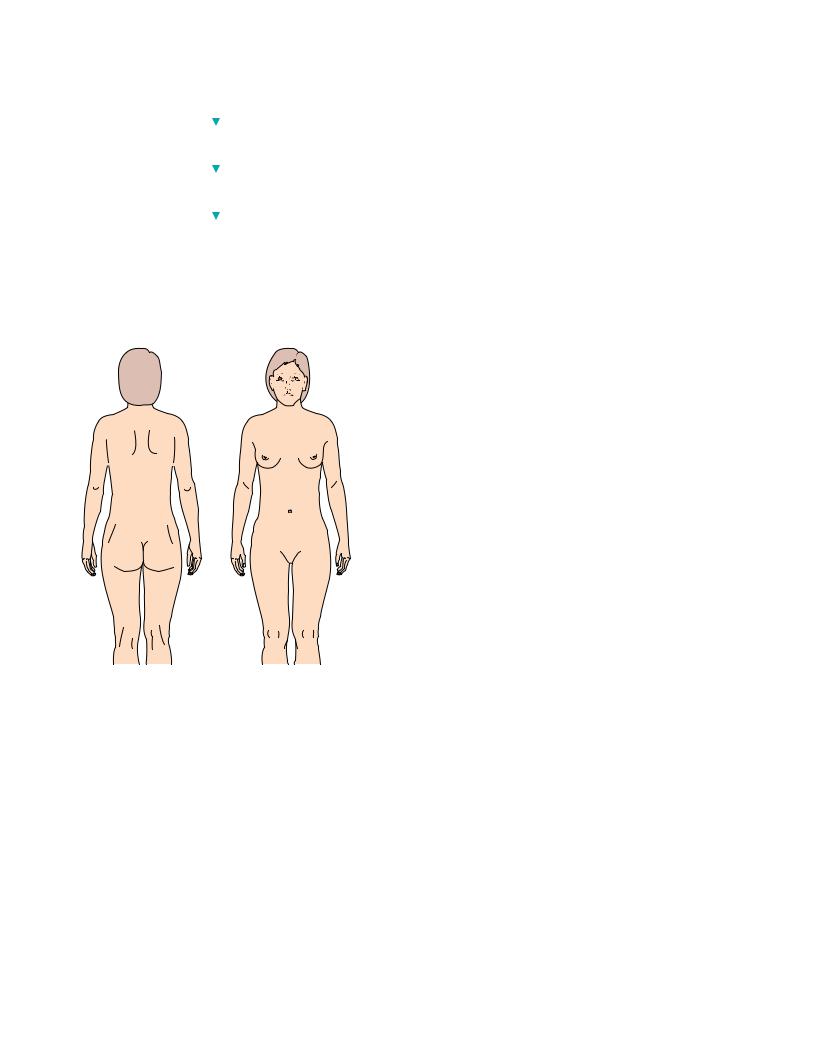
In 1990 the American College of Rheumatology developed criteria in order to define the condition of fibromyalgia for research purposes (Box 8.1). Clinicians tend to look at these criteria in addition to their own assessment of the history and examination findings. It is important not to use these criteria too literally. However, the history will be of at least 3 months and the pain will be widespread. The story given and the objective findings are often in discordance. The main finding on examination will be multiple hyperalgesic tender sites (Figure 8.2). Patients without fibromyalgia may find pressure on these sites uncomfortable, but in general will not wince or withdraw in the manner that a patient with fibromyalgia will.
Box 8.1 American College of Rheumatology diagnosis of
fibromyalgia (1990)
•Widespread musculoskeletal pain in all four quadrants of the body and some axial pain (cervical spine, anterior chest, thoracic spine or low back)
•Present for at least 3 months
• Hyperalgesic points positive on digital pressure of 4 kg in 11 out of 18 points on the figure (hyperalgesia is absent in other control areas of the body, e.g. forehead)
•The points are all bilateral and situated in:
suboccipital muscle insertions at the base of the skull
low cervical spine C5-7interspinous ligaments
trapezius muscles at the midpoint of the upper border
supraspinatus origins above the scapulae spines
second costochondral junctions on upper surface lateral to junction
2 cm distal to lateral epicondyles
upper outer quadrants of buttocks in anterior fold of gluteus medius
greater trochanters posterior to trochanteric prominence
medial fat pads of knee proximal to the joint line
47
48 |
ABC of Rheumatology |
|
|
|
||
|
|
|
|
|
|
|
|
|
|
|
|
Table 8.1 Physical and psychological associations with fibromyalgia |
|
|
|
|
|
|
||
|
|
No pain |
||||
|
|
|
|
|
||
|
|
|
|
|
Physical |
Psychological |
|
|
|
|
|
||
|
|
|
|
|
|
|
|
|
|
|
|
Irritable bladder |
Panic attacks |
|
|
Chronic regional musculoskeletal pain |
|
|||
|
|
|
|
Irritable bowel |
Anxiety |
|
|
|
|
|
|||
|
|
|
|
Migraine |
Depression |
|
|
|
|
|
Muscle spasm |
Irritability |
|
|
|
Chronic widespread pain |
||||
|
|
Dizziness |
Memory lapses |
|||
|
|
|
|
|||
|
|
|
|
Perception of swelling |
Word mix-ups |
|
|
|
|
|
Paraesthesiae |
Reduced concentration |
|
|
|
|
|
|||
|
|
Fibromyalgia |
Temperature changes |
|
||
|
|
|
|
Fatigue |
|
|
Figure 8.1 The pain spectrum |
|
|||||
|
|
|
||||
|
|
|
||||
Figure 8.2 Distribution of hyperalgesic tender spots
Fibromyalgia occurs as a stand-alone condition or can occur as a consequence of other rheumatological conditions, e.g. rheumatoid arthritis, systemic lupus erythematosus and Sjögren’s syndrome. The term “secondary fibromyalgia” is sometimes used in these situations.
Some of the more common physical and psychological symptoms associated with fibromyalgia syndrome are listed in Table 8.1.
A full examination must therefore be undertaken at presentation or at referral. There should be no “red flags” (such as unexplained weight loss) potentially signalling serious underlying conditions. There may well be “yellow flags”, which suggest psychosocial problems, although they may not be apparent initially.
Limited investigations to exclude other causes of widespread pain are usually undertaken at presentation (thyroid function tests, full blood count, inflammatory markers, serum calcium and alkaline phosphatase, biochemical profile, creatine kinase, random blood glucose). The emphasis has to be on the biopsychosocial perspective, and any subsequent tests may well increase levels of anxiety. It is important to make a positive diagnosis of fibromyalgia after initial examination of the patient and explain to the patient that the blood tests are simply to ensure there is no underlying condition. They need to know there is no diagnostic test for fibromyalgia. It is useful at this stage to discuss what fibromyalgia is and possible models for causation with the patient in order to prepare them for the normal results of investigations. A well-informed patient will then not feel rejected.
Clinical picture
The typical patient will tend to be female, aged 30–50 years, with long-standing diffuse pain. She will often have a history of physical or psychological trauma, and this may have been related to previous abuse. She will describe a fatigue on waking. The symptoms are always present but are exacerbated by other stressors in her life. She may have experienced rejection by other doctors who investigated but did not find an organic cause of the symptoms. This rejection can lead to more anxiety and hence intensification of the symptoms. The patient may have also become depressed if her symptoms have not been helped by previous interventions.
The examination of such a patient reveals tender hyperalgesic sites and the patient visibly winces when they are pressed.
Cause
No single pathophysiological causative mechanism has been identified (Box 8.2), and the evidence to date suggests that fibromyalgia is a multifactorial syndrome characterized by abnormal processing of pain, known as central sensitization. In this process neuronal pain pathways originally activated from an identifiable noxious source later become activated in the absence of a clear stimuli. Neuroendocrine abnormalities have also been identified, but their clinical significance is not understood.

Fibromyalgia Syndrome |
49 |
|
|
|
|
Box 8.2 Theories regarding causation
•Neuroendocrine disturbance
•Neurohormonal dysfunctions
•Abnormal pain processing
•Autonomic nervous system dysfunction
•Genetic predisposition to pain sensitivity
•Sleep physiology
•Lack of stage 4 sleep
•Muscle pathology
•Changes in regulation of intramuscular microcirculation
•Decrease in energy-rich phosphates
•Allergy, infection, toxicity and nutritional deficiency
•Psychosomatic
•Trauma-whiplash
•Neurotransmitter regulation
Management of fibromyalgia
The experience of pain is influenced by physical, psychological and social factors, which may mitigate or enhance the pain experience (Figures 8.3 and 8.4). Therefore as part of the assessment process it is important to identify any psychological (emotional distress, anxiety, difficult life predicaments, identifiable stressors) or social (family history, work issues) influences on the pain, as these will need to be addressed as quickly as possible to facilitate behavioural change.
The goals of management are twofold to assist the patient in the development of self-management skills and to improve the patient’s physical and psychological function.
Education
The patient will often need guidance, support and motivation from a health professional before feeling able to take an active role in the management of their symptoms. Physical inactivity, unrestorative sleep and emotional stress can increase the intensity of pain, and these areas need to be addressed. Patient-centred management goals need to be realistic to prevent failure and increased feelings of helplessness. A review of the evidence from multidisciplinary rehabilitation in fibromyalgia advocates the use of behavioural strategies (graded exercise, pacing, cognitive behavioural therapy, goal setting and relaxation) and stressmanagementtechniques.Someofthesestrategiesarecoveredinchronic- disease-management programmes such as the Expert Patient Programme.
Graded exercise
Many patients become physically de-conditioned and are fearful that exercise will induce damage to the joints or increase the pain and fatigue. The aim of graded exercise (that is, gradually increasing activity over a period of time) is to improve the patient’s general level of physical fitness by increasing muscle strength, stamina and flexibility. Through improving fitness levels the patient will be able to increase their general level of activity and experience a positive effect on well-being and sleep. Several sessions of super-
|
|
Lifestyle factors |
|
Social factors |
|||
|
• Unrestorative sleep |
||
• Work dissatisfaction |
|
• Decreased physical |
|
• Isolation |
|
activity |
|
• Relationship breakdown |
|
|
|
|
|
||
|
|
|
|
|
|
|
Cognitive factors |
|
|
Individual |
|
• Fear of the future |
|
|
|
• Helplessness |
|
|
|
|
|
|
|
|
|
|
• Loss of control |
Trauma |
|
|
|
|
• Physical - whiplash injury |
|
|
|
|
|
|
|
Affective factors |
|
• Psychological - |
|
|
|
|
unresolved issues, abuse |
|
|
|
• Anxiety |
|
|
|
|
• Depression |
|
|
|
|
|
|
|
|
|
|
Figure 8.3 Factors that may influence pain perception
|
|
|
|
Pain |
|
|
|
|
|
|
|
|
|
|
|
|
|
Fear of |
|
|
|
|
|
Fear of |
||
the future |
|
|
|
|
|
movement |
||
|
|
|
|
|
|
|
|
|
|
|
|
|
|
|
|
|
|
|
|
|
|
|
|
|
|
|
|
|
|
|
|
|
|
|
|
Unrefreshed |
|
|
|
|
|
Reduced |
||
sleep |
|
|
|
|
|
activity |
||
|
|
|
|
Increased |
|
|
||
|
|
|
|
pain |
|
|
|
|
|
|
|
|
|
|
|
|
|
Figure 8.4 The pain cycle
vised exercise may be needed at first to provide reassurance and feedback.
Pacing activities
Pacing involves breaking down everyday activities into achievable components. Patients tend to exert themselves on a “good day” and under-exert on a “poor day”. Pacing removes the “all-or-nothing” mentality that is not helpful in this condition. If patients can plan their activities, e.g. cleaning one room in the house a day instead of doing all the rooms in one go, they will still achieve the desired outcome and be able to remain active every day instead of continually entering the “boom-and-bust” cycle. Patients should be encouraged to remain in the workplace and where possible apply the principles of pacing in their work situation.
Relaxation
Relaxation can reduce muscle tension, muscle pain, general feelings of anxiety, improve sleep and foster a sense of control over the condition.
Developing a sleep routine
Patients often develop an erratic sleep pattern and feel unrefreshed on waking. This increases the perception of pain, leads to poor

50 ABC of Rheumatology
cognitive functioning and low mood state and reduces the ability to cope with everyday events. Self-help measures can improve the quality of a person’s sleep. These include avoiding daytime sleeping, going to bed at the same time each night, carrying out relaxation techniques to clear the mind prior to settling, avoiding stimulants such as coffee and providing a quiet, well-ventilated environment.
Drug therapy
Pharmacological treatments are not particularly successful. Tricyclics such as amitriptyline may be helpful in improving sleep disturbance. Amitriptyline is prescribed in small incremental doses in general ranging from 10–50 mg (some patients are sensitive to side effects and need only 5 mg) and should be taken 2 hours prior to settling at night. The decision to increase the dose will be based on efficacy and side effects. Even with low doses side effects are common, albeit usually minor. Tricyclics should help improve sleep within 2 weeks, but a longer trial of 3–4 months is required to assess efficacy on pain. Serotonin-uptake inhibitors can improve energy and provide pain relief but tend to lose their effectiveness over time. Duloxetine has also been shown to reduce pain in women with fibromyalgia. Pregabalin has been shown to be helpful in reducing pain and fatigue and improving sleep. Simple analgesia, such as paracetamol, may be prescribed, but there is little evidence to support the use of strong narcotics.
Complementary/alternative medicine
Although few studies have examined the benefits of complementary/alternative medicine, patients often use numerous types of such treatments, including massage therapy, chiropractic and acupuncture.
In conclusion, a biopsychosocial approach to the assessment and management of patients with fibromyalgia is required, with an emphasis on assisting patients to develop coping strategies.
Further reading
Bird H. Drug treatment for fibromyalgia. Musculoskeletal Care 2004; 2: 90–100.
Rorbeck J, Jordan K, Croft P. The frequency and characteristics of chronic widespread pain in general practice. British Journal of General Practice 2007; 57: 109–115.
Sim J, Adams N. Physical and other non-pharmacological interventions for fibromyalgia. Bailliere’s Best Practice & Research Clinical Rheumatology
1999; 13: 507–523.
White KP, Harth M. An analytical review of 24 controlled clinical trials for fibromyalgia syndrome. Pain 1996; 64: 211–219.
Wolfe F. Stop using the American College of Rheumatology criteria in clinic.
Journal of Rheumatology 2003; 30: 1671.

CHAPTER 9
Osteoarthritis
Virginia Byers Kraus1 and Michael Doherty2
1Duke University Medical Center, Durham, USA
2Nottingham City Hospital, Nottingham, UK
OVERVIEW
•Osteoarthritis (OA) is the most common form of arthritis.
•Symptoms of OA are often episodic.
•The goals of treatment are to relieve pain, minimize disability and improve quality of life.
•Non-pharmacologic treatments are as important as pharmacologic treatments for OA.
•Criteria for joint replacement include uncontrolled pain and severe impairment of function despite conservative treatment.
Introduction
Osteoarthritis (OA) is the most common condition to affect synovial joints, the most important cause of locomotor disability, and a major challenge for health-care providers (Figure 9.1a). Because OA increases significantly with age (Figure 9.1b), it was long considered to be a degenerative disease that was an inevitable consequence of ageing and trauma. However, it is viewed now as a metabolically dynamic process characterized by an imbalance of joint breakdown in association with a maladaptive and insufficient repair process.
OA can result from abnormal biomechanical stresses (e.g. severe injury, repetitive excessive loading) superimposed on normal joint physiology. It may also result from normal stresses applied to an inherently compromised joint with abnormal physiology, for example weakened cartilage due to a genetic mutation in collagen II (Figure 9.2). In fact, the genetic contribution to OA is equal to or greater than the genetic contribution to the most common inflammatory arthritis in women—rheumatoid arthritis (RA) (Figure 9.3). Moreover, the relative disability associated with these two forms of arthritis is similar (Figure 9.4). Thus, OA can be considered as the consequence or final common pathway of a number of interacting risk factors and processes, including genetic factors, gender, increasing age, excess weight, injury, joint
ABC of Rheumatology, 4th edn. Edited by Ade Adebajo. ©2010 Blackwell Publishing Ltd. 9781405170680.
deformity and occupational exposures. Risk factors may vary in importance according to the site of involvement (Table 9.1), and risk factors for development of OA may differ from risk factors for progression. For example, high bone density is a risk factor for development of knee, hip and hand OA, but low bone density is a risk factor for more rapid radiographic progression of hip and knee OA.
Presentation
OA is traditionally separated into two main categories: primary and secondary. Primary OA typically involves joints in characteristic locations (Figure 9.5a) and is likely to result mainly from genetic predisposition—the case of abnormal joint physiology as described above. Multiple Heberden’s nodes (bony enlargement of distal interphalangeal joints of the hand) (Figure 9.6) appear in middle age and are a strong marker for subsequent predisposition to knee OA and OA at other common target sites (“nodal generalized OA”). However, OA can occur in any joint. When OA occurs in atypical joints, such as the ankle, the presentation alone should trigger consideration of secondary OA. Typical aetiologies of secondary OA include joint trauma, previous fracture and preceding inflammatory arthropathy such as gout—the case of abnormal joint stressors as described above. The most common of these, joint trauma, can lead to OA 15–20 years after the joint insult and can be a cause of young-onset monoor pauciarticular OA (Figure 9.7). When abnormal joint stressors and abnormal joint physiology occur together, the outcome is potentially even more severe. This is illustrated by the fact that severe meniscal damage to the knee is more likely to cause eventual knee OA in patients with hand OA (evidence for a genetic predisposition to OA) compared with patients without hand OA (Englund et al., 2004).
It is useful to contrast the distribution of OA joints with that of RA (Figure 9.5b). RA involves multiple joints in a symmetrical pattern, and spares the distal interphalangeal joints of the fingers. The radiographic manifestations of these two arthritides are distinct and can be used in their differential diagnosis as described below.
Despite the varying aetiologies, the presenting manifestations of
OA are pain, |
loss of |
joint motion and function, minimal |
(<30 minutes) |
morning |
stiffness and short-lived stiffness after |
51