Дипломная (вкр): Семантика фразеологических единиц школьной тематики
Метод фразеологической идентификации позволил нам провести классификацию ФЕ по типам фразеозначения и выделить в исследуемой группе идиоматизмы, идиофразеоматизмы и фразеоматизмы. Оказалось, что в исследуемой группе преобладают идиоматизмы.
Говоря о коннотативном аспекте, можно отметить, что в нашей картотеке преобладают ФЕ с отрицательной оценкой, но также имеется большое количество ФЕ с нейтральной оценкой. Это говорит о том, что ФЕ школьной тематики не обязательно должны иметь какую-либо оценку. Также большинство ФЕ редко являются носителями интенсифицирующей экспрессивности.
Для того, чтобы определить исходно-этимологическое значение ФЕ рассматриваемой группы и выделить ФЕ с живой внутренней формой, мы пользовались методом фразеологического анализа. На нашем материале мы обнаружили 41 ФЕ с живой внутренней формой.
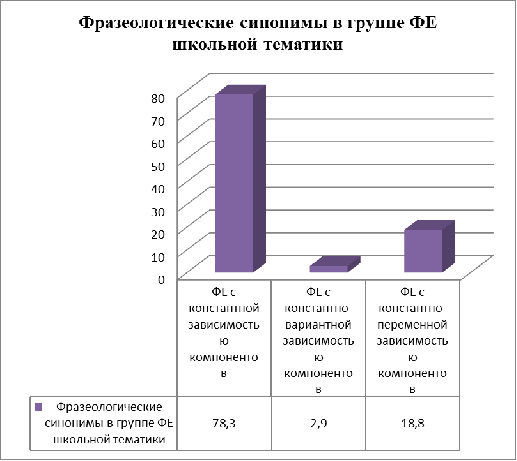
В группе ФЕ школьной тематики распространена синонимия, и большинство синонимов рассматриваемой группы являются идеографическими.
Мы доказали также и то, что в ФЕ исследуемой
группы присутствуют все типы зависимости, а одна и та же ФЕ может различаться
по функционально-стилистическому компоненту.
СПИСОК ИСПОЛЬЗУЕМОЙ ЛИТЕРАТУРЫ
1. Алефиренко Н.Ф. Спорные проблемы семантики [Текст] / Н.Ф. Алефиренко. - Монография. М.: Гнозис, 2005. - 326 с.
. Алехина А.И. Фразеологическая единица и слово. К исследованию фразеологической системы [Текст] / А.И. Алехина. - Минск: Изд-во БГУ им. В.И. Ленина, 1979. - 151 с.
. Амосова Н.Н. Основы английской фразеологии [Текст] / Амосова Н.Н. - Л.: Издательство ЛГУ, 1963. - 208 с.
. Апресян Ю.Д. Лексическая семантика. Синонимические средства языка [Текст] / Ю.Д. Апресян. - М.: Наука, 1974. - 366 с.
. Арнольд И.В. Стилистика современного английского языка[Текст] / И.В. Арнольд. - Л.: Просвещение, 1973. - 303 с.
. Архангельский В.Л. Устойчивые фразы в современном русском языке [Текст] / В.Л. Архангельский. - Ростов-на-Дону, 1964. - 315 с.
. Ахманова О.С. Словарь лингвистических терминов [Текст] / О.С. Ахманова. - М.: Сов. Энциклопедия, 2004. - 607 с.
. Беляевская Е.Г. Семантика слова [Текст] / Е.Г. Беляевская. - М.: Высш. шк., 1987 - 128 с.
. Вейнрейх У.О. О семантической структуре языка [Текст] / У.О. Вейнрейх // Новое в лингвистике. - М., 1970. - с. 163-250.
. Гак В.Г. К проблеме семантической синтагматики // Проблемы структурной лингвистики [Текст] / В.Г. Гак. - М.: Наука, 1972. - с. 362-369.
. Гальперин И.Р. Очерки по стилистике английского языка [Текст] / И.Р. Гальперин. - М., 1958. - 267 с.
. Девкин В.Д. Немецкая разговорная речь. Синтаксис и лексика [Текст] / В.Д. Девкин. - М.: Международные отношения, 1979. - 256 с.
. Добровольский Д.О. К проблеме лексико-семантических универсалий [Текст] / Д.О. Добровольский // Филологические науки. - 1986. - №5. - с.24-30.
. Жуков В.П. Семантика фразеологических оборотов [Текст] / В.П. Жуков. - М.: Просвещение, 1978. - 160 с.
. Жуков В.П. Русская Фразеология [Текст] / В.П. Жуков. - М.: Высш. шк., 1986. - 310 с.
. Кодухов В.И. Общее языкознание. Учебник для студентов филол. специальностей ун-тов и пед. ин-тов [Текст] / В.И. Кодухов. - М.: Высшая школа, 1974. - 303 с.
. Кондаков Н.И. Логический словарь-справочник [Текст] / Н.И. Кондаков. - М.: Наука, 1975. - 720 с.
. Копыленко М.М., Попова З.Д. Очерки по общей фразеологии [Текст] / М.М. Копыленко, З.Д. Попова. - Воронеж: Изд-во Воронеж. Ун-та, 1978. - 143 с.
. Коралова А.Л. Характер информатичности фразеологических единиц // Сб. науч. тр. МГПИИЯ им.. Тореза, Вып.168 [Текст] / А.Л. Коралова. - М., 1980, с. 123-133.
. Кумачева А.В. Фразеологические сочетания как часть словарного состава [Текст] / А.В. Кумачева //Иностранные языки в школе. - 1953. - №6. - стр.12.
. Кунин А.В. Английская фразеология /теоретический курс/ [Текст] / - М.: Высшая школа, 1970. - 324 с.
. Кунин А.В. Фразеология современного английского языка [Текст] / А.В. Кунин. - М.: Международные отношения, 1972. - 288 с.
. Кунин А.В. Курс фразеологии современного английского языка: Учеб. для ин-тов и фак. иностр. яз. - 2-е изд., перераб. [Текст] / А.В. Кунин. - М.: Высшая школа, Дубна: Изд. центр «Феникс», 1996 - 381 с.
. Ларин Б.А. Очерки по фразеологии // Очерки по лексикологии, фразеологии и стилистике: Учен. зап. / ЛГУ [Текст] / Б.А. Ларин. - Л., 1956. - №198.
. Маргулис В.Д. Изучение значения словосочетания и семантики текста [Текст] / В.Д. Маргулис. - Свердловск: Изд-во Уральского ун-та, 1987. - 170 с.
. Маслова В. А. Лингвокультурология [Текст]/ В.А. Маслова// Учеб. пособие для студ. высш. учеб. завед. - М.: Издательский центр «Академия», 2001. - 208 с.
. Мельчук И.А. О терминах «устойчивость» и «идиоматичность» [Текст] / И.А. Мельчук // Вопросы языкознания. - 1960. - №4. - с.73-80.
. Никитин М.В. Лексическое значение в слове и словосочетании [Текст] / М.В. Никитин //Спецкурс по общей и английской лексикологии. - Владимир, 1974. - 222 с.
. Никитин М.В. Основы лингвистической теории значения [Текст] / М.В. Никитин. - М.: Высшая школа, 1988. - 168 с.
. Общее языкознание: Методы лингвистических исследований [Текст] / Отв. ред. Б.А. Серебренников. - М., 1973. - 318 с.
. Потебня А.А. Из записок по русской грамматике [Текст] / А.А. Потебня. - М.: Просвещение, 1982 - 287 с.
. Смирницкий А.И. Лексикология английского языка [Текст] / А.И. Смирницкий. - М.: Московский Государственный Университет, 1998. - 260с.
. Степанов Ю.С. Методы и принципы современной лингвистики [Текст] / Ю.С. Степанов. -.: Наука, 1975. - 311 с.
. Телия В.Н. Культурно-национальные коннотации фразеологизмов [Текст] / В.Н. Телия// Славянское языкознание. ХI международный съезд славистов. - М., 1993. - 308 с.
. Телия В.Н. Типы языковых значений. Связанное значение слова в языке [Текст] / В.Н. Телия. - М.: Наука, 1986. - 269 с.
. Телия В.Н. Русская фразеология: семантический, парадигматический и лингвокультурологический аспекты [Текст] / В.Н. Телия. - М.: Языки русской культуры, 1996. - 228 с.
. Шмелев Д.Н. Проблемы семантического анализа лексики [Текст] / Д.Н. Шмелев. -.: Наука, 1973. - 211 с.
. Шанский Н.М. Фразеология современного русского языка [Текст] / Н.М. Шанский. - М., 1969. - 230 с.
. Эмирова А.М. Некоторые актуальные вопросы современной русской фразеологии [Текст] / А.М. Эмирова. - Самарканд, 1972. - с.59-89.
. Языкознание. Большой энциклопедический словарь [Текст] / Гл. ред. В.Н. Ярцева. - 2-е изд. -.: Большая Российская Энциклопедия, 1998. - 687 с.
Список словарей:
1. Collins Cobuild Dictionary of Idioms/ - Harper Collins Publishers ltd., 1997. - 493 p.
. Longman Idioms Dictionary, Addison Wesley Longman Limited, 2002. - 402 p.
. Cambridge Dictionary of American Idioms, Cambridge University Press, 2003. - 512 p.
4. Кунин
А.В. Большой Англо-Русский фразеологический словарь. - Изд. 4-е, переработанное
и дополненное. - М.: Русский язык, 1984. - 944 с.
ПРИЛОЖЕНИЯ
Приложение 1
ФЕ школьной тематики.
|
№ |
ФЕ |
Дефиниция |
||
|
1 |
To tell tales out of school |
To talk maliciously about a person’s private affairs behind his back. |
||
|
2 |
A hard school |
A strict training. |
||
|
3 |
A man of the old school |
Someone whose education and point of view is based on traditional principles and loyalties. |
||
|
4 |
A different school of thought |
A different body of opinion. |
||
|
5 |
Top/bottom of the class |
To excel/to do badly in a particular field or subject. |
||
|
6 |
In a class of one’s own |
To be incomparably better than one’s companions in a particular subject or skill. |
||
|
7 |
An object lesson |
A model of how smth should/should not be done. |
||
|
8 |
To teach someone a lesson |
To punish or make someone feel sorry. |
||
|
9 |
A straight answer |
A clear, simple and unambiguous answer. |
||
|
10 |
To know all the answers |
To be an expert To take a smug satisfaction in one’s knowledge and cleverness. |
||
|
11 |
To answer back |
To answer insolently when corrected or rebuked. |
||
|
12 |
To read between the lines |
To draw conclusions about the writer’s feelings from the manner and tone of the work and not from his actual words. |
||
|
13 |
To read smth into smth |
To put words into a work to suggest a meaning that was not intended by the author. |
||
|
14 |
To write smth off |
To acknowledge that smth no longer has any value. |
||
|
15 |
To do one’s sums |
To make one’s calculations or estimate. |
||
|
16 |
To get one’s sums right |
To make a correct calculation or estimate. |
||
|
17 |
To reckon without one’s host |
To make one’s plans or calculations without taking other people’s views into account, to ignore possible opposition. |
||
|
18 |
To take someone’s measure |
To judge someone’s character and abilities, his strengths and weaknesses. |
||
|
19 |
To stand up and be counted |
To declare one’s principles openly, whatever the cost to one’s career or reputation. |
||
|
20 |
Count me out |
I do not agree with you and do not wish to be accounted among your supporters. |
||
|
21 |
To draw the line |
To set a limit to one’s tolerance. |
||
|
22 |
To draw a parallel |
To point to similarities between two (historic) events or phenomena. |
||
|
23 |
To go off at a tangent |
To introduce an irrelevant subject in the course of a discussion. |
||
|
24 |
To go round in circles |
To think for a long time about a problem without getting any nearer to a solution. |
||
|
25 |
To come full circle |
To return to one’s starting point. |
||
|
26 |
A vicious circle |
A chain of events in which the cause of the difficulty/disorder produces an effect which intensifies the cause. |
||
|
27 |
To square the circle |
To try to do the impossible. |
||
|
28 |
Fair and square |
With the utmost frankness. |
||
|
29 |
A square deal |
Fair treatment. |
||
|
30 |
To square accounts |
To revenge oneself on someone. |
||
|
31 |
To square an account |
To pay a bill. |
||
|
32 |
All square |
A golfing phrase, meaning that the score is even. |
||
|
33 |
On the square |
Honest, straightforward, dependable. |
||
|
34 |
To make history |
To do smth important, for which one will be remembered. |
||
|
35 |
To go down in history |
To be sufficiently important to be remembered or recorded. |
||
|
36 |
Ancient history |
Smth that is already familiar to everyone, nothing new. |
||
|
37 |
To put a place on the map |
To bring a place to the attention of the public, to make a place well-known. |
||
|
38 |
To keep a low profile |
To avoid attracting attention, to be inconspicuous. |
||
|
39 |
No oil painting |
Not at all good-looking. |
||
|
40 |
To wipe the slate clean |
To give someone another chance and overlook past offences. |
||
|
41 |
To blot one’s copybook |
To make a serious mistake, that damages one’s record. |
||
|
42 |
To give someone full marks for |
To give someone credit for a faultless achievement. |
||
|
43 |
A sneaking sympathy |
A sympathy for someone or something that one is reluctant to admit. |
||
|
44 |
To egg someone on |
To encourage someone to do wrong, as for example by breaking rules. |
||
|
45 |
A hard and fast rule |
A rule that is strictly enforced and cannot be changed or varied in any circumstances. |
||
|
46 |
To rule with a rod of iron |
To use the utmost severity in maintaining order. |
||
|
47 |
To kiss the rod |
To accept punishment meekly and submissively. |
||
|
48 |
To haul over the coals |
To rebuke severely. |
||
|
49 |
To be whacked |
To be exhausted. |
A fair whack |
A fair share. |
|
51 |
A whacking/thumping/whopping lie |
A huge, obvious lie. |
||
|
52 |
A whipping-boy |
Someone who is made responsible for the mistakes and faults of another. |
||
|
53 |
A new boy |
Someone who is new to a position of employment or a place of work. |
||
|
54 |
The old boy network |
An association of ex-public school boys. |
||
|
55 |
A school of hard knocks |
A way of learning valuable lessons in life through practical experience and not through the books. |
||
|
56 |
To make the grade |
If we want to make the grade, then we want to meet high expectations or become acceptable. By making the grade we are satisfying requirements and making ourselves, our actions, or output adequate. |
||
|
57 |
An eager beaver |
If he or she is very passionate about his or her work. He or she works very hard and for long hours. He or she is also very enthusiastic about working. |
||
|
58 |
To learn the ropes |
To learn how to do a job. |
||
|
59 |
To live and learn |
When you hear or discover something which is surprising |
||
|
60 |
To teach an old dog new tricks |
The older you are the more set in your ways you become. |
||
|
61 |
To teach your grandmother to suck eggs |
To give advice to someone about a subject that they already know more about than you |
||
|
62 |
To pass with flying colours |
To pass with a very high grade. |
||
|
63 |
To pull an all nighter |
To study throughout the night. |
||
|
64 |
A for effort |
To recognize that someone tries hard to do something even though they may not be successful |
||
|
65 |
To count noses |
To count the number of people |
||
|
66 |
To flunk out |
To fail a course or fail out of school |
||
|
67 |
To play hooky |
Not go to school when you should |
||
|
68 |
A university of life |
To learn from daily life and work rather than going to university |
||
|
69 |
To blind someone with science |
If they blind someone with science, they tell you about smth in a complex or technical way so that have difficulty in understanding it. |
Приложение 2
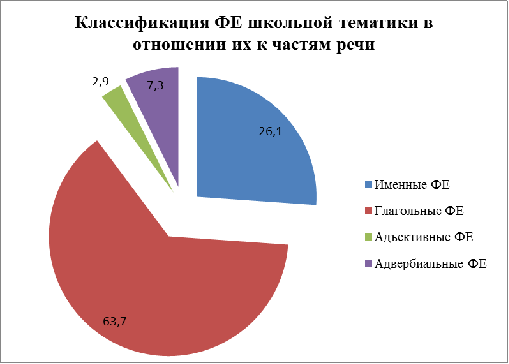
Классификация ФЕ школьной тематики по частеречной принадлежности
|
Часть речи |
ФЕ школьной тематики |
|
1. Именные ФЕ |
A hard school A man of the old school A different school of thought An object lesson A straight answer A vicious circle A square deal Ancient history A sneaking sympathy A hard and fast rule A fair whack A whacking/thumping/whopping lie A whipping-boy A new boy The old boy network A school of hard knocks An eager beaver A university of life |
|
2. Глагольные ФЕ |
To tell tales out of school To teach someone a lesson To know all the answers To answer back To read between the lines To read smth into smth To write smth off To do one’s sums To get one’s sums right To reckon without one’s host To take someone’s measure To stand up and be counted Count me out To draw the line To draw a parallel To go off at a tangent To go round in circles To come full circle To square the circle To square accounts To square an account To make history To go down in history To put a place on the map To keep a low profile To wipe the slate clean To blot one’s copybook To give someone full marks for To egg someone on To rule with a rod of iron To kiss the rod To haul over the coals To be whacked To make the grade To learn the ropes To live and learn To teach an old dog new tricks To teach your grandmother to suck eggs To pass with flying colours To pull an all nighter To count noses To flunk out To play hooky To blind someone with science |
|
3. Адъективные ФЕ |
Top/bottom of the class No oil painting |
|
4. Адвербиальные ФЕ |
In a class of one’s own Fair and square All square On the square A for effort |
Приложение 3
Приложение 4
Фразеологические синонимы в группе ФЕ школьной тематики
|
№ |
Группа ФЕ |
Дефиниция |
Семантические компоненты, тип синонимов |
|
1. |
A hard school |
A strict training. |
Интегрирующий компонент: strictness Дифференцирующий компонент: school, rule Идеографические синонимы с одинаковой образностью |
|
|
A hard and fast rule |
A rule that is strictly enforced and cannot be changed or varied in any circumstances. |
|
|
2. |
Top/bottom of the class |
To excel/to do badly in a particular field or subject |
Интегрирующий компонент: excellence Дифференцирующий компонент: marks, impossibility, success Идеографические синонимы с одинаковой образностью |
|
|
In a class of one’s own |
To be incomparably better than one’s companions in a particular subject or skill |
|
|
|
To square the circle |
To try to do the impossible |
|
|
|
To make the grade |
If we want to make the grade, then we want to meet high expectations or become acceptable. By making the grade we are satisfying requirements and making ourselves, our actions, or output adequate |
|
|
3. |
To teach someone a lesson |
To punish or make someone feel sorry. |
Интегрирующий компонент: punishment Дифференцирующий компонент: corporal punishment, an acceptance of a punishment, strict control Идеографические синонимы с различной образностью |
|
|
To rule with a rod of iron |
To use the utmost severity in maintaining order. |
|
|
|
To kiss the rod |
To accept punishment meekly and submissively |
|
|
|
To haul over the coals |
To rebuke severely. |
|
|
4. |
Fair and square |
With the utmost frankness. |
Интегрирующий компонент: honesty Дифференцирующий компонент: deal, frankness, score, share Идеографические синонимы с одинаковой образностью |
|
|
A square deal |
Fair treatment. |
|
|
|
All square |
A golfing phrase, meaning that the score is even. |
|
|
|
On the square |
Honest, straightforward, dependable. |
|
|
|
A fair whack |
A fair share. |
|
|
5. |
A straight answer |
A clear, simple and unambiguous answer. |
Интегрирующий компонент: knowledge Дифференцирующий компонент: education, quickness Стилистико-идеографические синонимы |
|
|
To know all the answers (AmE) |
To be an expert To take a smug satisfaction in one’s knowledge and cleverness. |
|
|
|
To learn the ropes (AmE) |
To learn how to do a job. |
|
|
|
To blind someone with science |
If they blind someone with science, they tell you about smth in a complex or technical way so that have difficulty in understanding it. |
|
|
6. |
To answer back |
To answer insolently when corrected or rebuked. |
Интегрирующий компонент: rudeness Дифференцирующий компонент: answer, inconsistence Идеографические синонимы с различной образностью |
|
|
To go off at a tangent |
To introduce an irrelevant subject in the course of a discussion. |
|
|
7. |
To reckon without one’s host (нейтральная ФЕ) |
To make one’s plans or calculations without taking other people’s views into account, to ignore possible opposition. |
Стилистические синонимы |
|
|
To blot one’s copybook (разг.) |
To make a serious mistake, that damages one’s record. |
|
|
8. |
To go round in circles (BrE) |
To think for a long time about a problem without getting any nearer to a solution. |
Интегрирующий компонент: circle Дифференцирующий компонент: solution, beginning, chain of events Стилистико-идеографические синонимы |
|
|
To come full circle |
To return to one’s starting point. |
|
|
|
A vicious circle |
A chain of events in which the cause of the difficulty/disorder produces an effect which intensifies the cause. |
|
|
9. |
To make history |
To do smth important, for which one will be remembered. |
Интегрирующий компонент: history Дифференцирующий компонент: creation, remember, events Идеографические синонимы с одинаковой образностью |
|
|
To go down in history |
To be sufficiently important to be remembered or recorded. |
|
|
10. |
To give someone full marks for |
To give someone credit for a faultless achievement. |
Интегрирующий компонент: effort Дифференцирующий компонент: hard work, marks Стилистико-идеографические синонимы |
|
|
An eager beaver (разг.) |
If he or she is very passionate about his or her work. He or she works very hard and for long hours. He or she is also very enthusiastic about working. |
|
|
|
A for effort |
To recognize that someone tries hard to do something even though they may not be successful |
|
|
11. |
A school of hard knocks |
A way of learning valuable lessons in life through practical experience and not through the books. |
Интегрирующий компонент: experience Дифференцирующий компонент: life, school, university Идеографические синонимы с одинаковой образностью |
|
|
To live and learn |
When you hear or discover something which is surprising |
|
|
|
A university of life |
To learn from daily life and work rather than going to university |
|
|
12. |
To teach an old dog new tricks |
The older you are the more set in your ways you become. |
Интегрирующий компонент: training Дифференцирующий компонент: in vain, uselessness Идеографические синонимы с различной образностью |
|
|
To teach your grandmother to suck eggs |
To give advice to someone about a subject that they already know more about than you |
|
Приложение 5