Материал: 2177
III. Work in pairs. Study the prompts in italics. Think of 2 or 3 sentences using the words from Ex. I applying the rule studied. Discuss
them in your group. |
|
||
С |
…material handling system… |
||
…machine tool… |
|||
… quality control system… |
|||
|
|||
|
… data collection… |
||
|
… control systems compatibility… |
||
* Find sentences with Noun chains in the text below and translate |
|||
и |
|
||
them. |
|
|
|
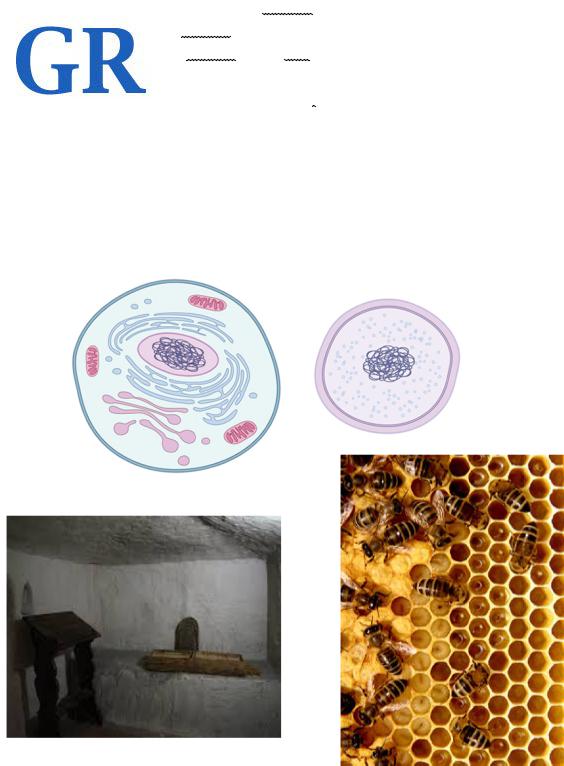
IV. Look at the pictures (pic. 15 – 17). What do they have in common? |
|||
б |
|||
|
А |
||
Pic. 15 |
Д |
||
|
|||
|
|
И |
|
Pic. 16
Pic. 17
76
V. Read the text and give the definition of the word “cell”.
CELLS AS
BASIC BUILDING BLOCKS OF FMSs
Сthan an operating group of several machines, perhaps with a material handlingиsystem that will work together but remain an isolated group, and cells that are made up of system-ready machines, specially planned for and intended to be expanded or integrated into a larger system.
The cell has always been considered as the basic building block of an FMS. And although there is a considerable activity in multiple-machine systems, the largest portion of the growth in interest in an FMS today is in
cells. This includes both cells that are never intended to be anything more
The cell has all the elements of a full FMS. Typically, the cell includes many manufacturing components such as two or three machine tools, material handling system, pallet changers, a workpiece store, a conveyor, robot, quality control system, host computer and management in-
formation system. The machine tools are capable of performing more than |
||
one operation automatically on more than one workpieces which pass |
||
through the бsystem along different routes. |
|
|
|
Automatic cleaning, inspecting and deburring devices, and/or devices |
|
for other functions may also be integrated into a flexible manufacturing |
||
cell. |
Generally speaking, cell functions include the supervision and coor- |
|
|
||
|
А |
|
dination of these components and devices, data collection and storage for |
||
communication with the area and other cells. |
|
|
|
It is important to note that one of the benefits of cells is their flexibil- |
|
ity which means that, if any cell breaks down for any reason, the produc- |
||
tion planning and control system canДreroute and reschedule the produc- |
||
tion. This can only be done if not only the process, but also the routing of |
||
the parts are programmable. |
|
|
|
Such manufacturing cells have in recent times experienced a rapid |
|
|
|
И |
growth in both the number of suppliers and users. Their appearance and frequent application closed an important gap between the individual machine tool and the interlinked systems.
For example, the plant has set up two separate flexible machining cells, each of which has its own manufacturing strategy. One cell is made up of three-axis machining centres with a conveyor for pallet transfer. Its application is the machining of highly complex workpieces. For the lower
77

quality components flexible transfer line system incorporating 10 threeaxis machining centres has been installed. In both cells minicomputers are responsible for supervisory control and there is full control systems compatibility across the two cells due to the adoption of uniform standards.
Summing it up one must say that current developments and/or trends Сare towards flexible cells and FMS concepts because the main benefits include improved productivity, better quality of product, less operator de-
pendence, more machine uptime during which a module can process parts and the potential for an unmanned third shift. To realize these benefits, however, proper design of the system and proper organization of the work ofиthe whole factory are required.
It should also be stressed that the application of the cell covers a much broader user base than the manufacturing or assembly systems do. The cell concept of an FMS technology has found its way into nearly every sector of manufacturing. A cell offers the best potential for production cost savings in small-batch production. The high level of interest in cell technology comes entirely from the fact that cells are an important form of au-
tomation for smaller users. |
|
||
|
А |
||
VI. Answerбthe questions. |
|||
1. |
Why are flexible cells popular? |
Д |
|
2. |
What is the structure of the cell? |
||
3. |
What are cell functions? |
||
|
|||
VII. Find the synonyms (the second column) to the words from the text (the first column). Classify them according to the part of speech: verb, noun, adjective, and adverb. Make up 3 sentences using the words from all the groups and both columns.
rapid |
merely |
|
|
link |
quantity |
|
|
frequently |
manufacturing |
|
|
consider |
advantage |
|
|
|
|
И |
|
only |
connection |
|
|
current |
think |
|
|
important |
often |
|
|
transfer |
completely |
|
|
number |
fast |
|
|
benefit |
move |
|
|
78
|
production |
|
|
significant |
|
|
|
|
entirely |
|
|
modern |
|
|
|
|
set up |
|
|
install |
|
|
|
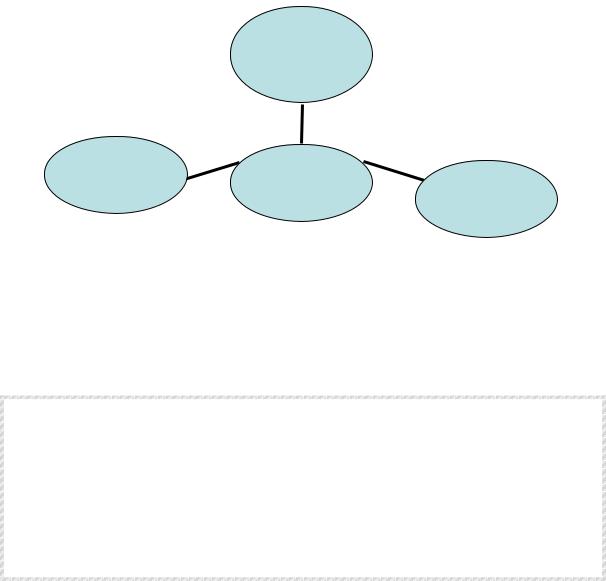
VIII. Complete the mind map which can help characterize the cell of |
|||||||
С |
|
|
|
|
|
|
|
an FMS. Discuss them in your group. |
|
|
|
||||
|
|
A building block |
|
|
|
||
и |
of an FMS |
|
|
|
|||
|
|
|
|
|
|||
|
б |
|
|
|
|||
? |
|
Cell |
|
? |
|
||
|
|
А |
|
||||
|
|
|
|
||||
IX. Work in pairs. Using information from the text, make up 5 sen- |
|||||||
tences (3 false sentences) and let your partner guess the false ones and |
|||||||
correct them. |
|
Д |
|||||
|
|
|
|
|
|
||
|
|
HOME TASK 10 |
|
|
|
||
A. Memorize the words from Ex. I and be ready to do a dictation. |
|||||||
B. Write the summary of the text above. |
И |
||||||
|
|
|
|||||
C. Using Lessons 6 – 10, make a crossword puzzle (10 words from Ex. I). Then let your groupmates do it.
TEST YOURSELF
The cell has always been considered as the 1) ___ building block of an FMS. And although there is a considerable activity in multiple-machine systems, the largest portion of the growth in interest in an FMS today is in 2) ___. This includes both cells that are never intended to be anything more than an operating group of several 3) ___, perhaps with a material handling
79

4) ___ that will 5) ___ together but 6) ___ an isolated group, and cells that are made up of 7) ___ machines, specially planned for and intended to be 8) ___ or 9) ___ into a larger system.
|
The cell has all the elements of a full 10) ___. Typically, the cell in- |
cludes many manufacturing 11) ___ such as two or three machine 12) ___, |
|
С |
|
material handling 13) ___, pallet 14) ___, a workpiece store, a conveyor, |
|
robot, quality control 15) ___, host 16) ___ and management information |
|
17) |
. The machine tools are capable of 18) ___ more than one operation |
automatically on more than one 19) ___ which pass through the system along different 20) ___.
It is important to note that one of the 21) ___ of cells is their 22) ___
which means that, if any cell breaks down for any reason, the production planning and control system can 23) ___ and 24) ___ the production. This can only be done if not only the process, but also the routing of the parts
time duringбwhich a module can process parts and the potential for an unmanned third shift. To realize these benefits, however, 32) ___ design of the system and 33) ___ organization of the work of the whole factory are
are 25) |
. |
|
иCurrent developments and/or trends are towards 26) ___ cells and |
||
FMS 27) ___ because the main benefits include 28) ___ productivity, 29) |
||
___ quality of product, 30) |
operator dependence, 31) ___ machine up- |
|
|
А |
|
required.
How many mistakes have you done? What are they?
|
|
|
И |
|
Refresh the words in Ex. I (Lesson 10) and get ready to have a dic- |
||||
tation. Do the crosswords of yourДgroupmates. |
||||
I. Listen and repeat. Using the dictionary, write in the [træn'skripSn] |
||||
of the words into the table below. |
|
|
||
|
|
|
|
|
1 |
computer- |
……………… |
станок с компьютерным |
|
|
controlled ma- |
|
управлением |
|
|
chine |
|
|
|
2 |
sequence |
……………… |
последовательность |
|
3 |
numerical con- |
……………… |
числовое программное |
|
|
trol |
|
управление (ЧПУ) |
|
80