Материал: 1964
Pic. 2
Russia has the world's largest forest reserves and is known as “the lungs of Europe”. It provides a huge amount of oxygen for not just Europe, but the world. With access to three of the world's oceans — the Atlantic, Arctic and Pacific — Russian fishing fleets are a major contributor to the world's fish supply. The Caspian is the source of what is considered the finest caviar in the world.
Pic. 3
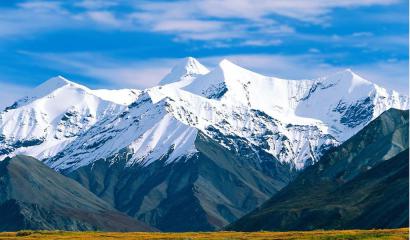
Mountain ranges are found along the southern borders, such as the Caucasus (containing Mount Elbrus, Russia's and Europe's highest point at 5,642 m / 18,511 ft) and the Altai, and in the eastern parts, such as the Verkhoyansk Range or the volcanoes on Kamchatka. The Ural Mountains form a north-south range that divides Europe and Asia, rich in mineral resources. Russia possesses 10% of the world's arable land.
Russia has thousands of rivers and inland bodies of water, providing it with one of the world's largest surface water resources. The largest and most prominent of Russia's bodies of fresh water is Lake Baikal, the world's deepest, purest, most ancient and most capacious freshwater lake. Other major lakes include Lake Ladoga and Lake Onega, two largest lakes in Europe. Of Russia's 100,000 rivers, The Volga is the most famous – not only because it is the longest river in Europe but also because of its major role in Russian history. Europe's biggest river, the Volga, flows into the Caspian Sea. The main Siberian rivers (the Ob, the Yenisei and the Lena) flow from the south to the north. The Amur in the Far East flows into the Pacific Ocean.
On the vast territory of the country there are various types of climate. It ranges from the Arctic north to the generally temperate south. In the middle of the country the climate is temperate and continental.
11. Work in pairs. Ask your partner the following questions to complete the table below.
1)Where is the Russian Federation situated?
2)What oceans is our country washed by?
3)Can you name any seas, which Russia is washed by?
4)What is the total area of the country?
5)What countries does the Russian Federation border on in the west (in the east)?
6)What can you say about the relief in Russia?
7)What mountain chains are there on the territory of our country?
8)What sea does the Europe's biggest river flow into?
9)What is the world's deepest lake famous for?
10)What types of climate are there in Russia?
11)What mineral resources is Russia rich in?
total area |
…… |
countries |
…… |
relief |
…… |
oceans |
…… |
seas |
Caspian, …… |
rivers |
…… |
lakes |
…… |
mountain chains |
…… |
types of climate |
…… |
mineral resources |
…… |
12. Tell the group about the geographical location and mineral resources of our country using the information from the table above.
13. Match a word on the left with a word on the right to make common expressions:
appoint; |
contract; |
approve; |
government; |
federal; |
referendum; |
national; |
to the position; |
social; |
treaties. |
14. Match the expressions from Ex. 13 with the following definitions:
1)competition and mutual restraint among the various branches of government;
2)submission of an issue of public importance to the direct vote of the electorate;
3)an agreement, entered into by individuals, that results in the formation of the state or of organized society, the prime motive being the desire for protection, which entails the surrender of some or all personal liberties;
4)a formal agreement or contract between two or more states, such as an alliance or trade arrangement;
5)to assign officially, as for a position, responsibility.
15. Find and underline the sentences with the following words in the text (Ex. 16).
adopt;
bicameral;
branch;
chamber;
checks and balances;
constitutional crisis;
declare war;
deem;
executive power;
legal document;
legislative power;
overturn;
power of the purse;
representative democracy;
supreme;
wherein.
16. Read the text to find out:
1.When was the Russian constitutional crisis?
2.When was the Constitution adopted according to which Russia is a federation?
3.What is the head of the state?
4.What is the head of the government?
5.What branches does the federal government comprise?
6.What do these branches consist of?
Pic. 4 |
Pic. 5 |
Government and Politics in Russia
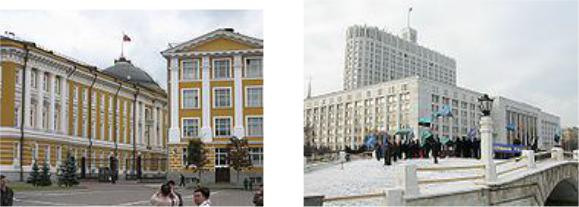
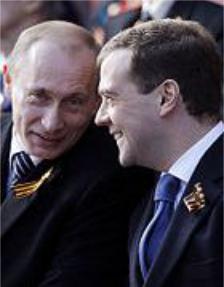
According to the Constitution, which was adopted by national referendum on 12 December 1993 following the 1993 Russian constitutional crisis, Russia is a federation and formally a semi-presidential republic, wherein the President is the head of the state and the Prime Minister is the head of the government. The Russian Federation is fundamentally structured as a representative democracy. Executive power is exercised by the government. Legislative power is vested in the two chambers of the Federal Assembly. The government is regulated by a system of checks and balances defined by the Constitution of the Russian Federation, which serves as the country's supreme legal document and as a social contract for the people of the Russian Federation.
The federal government is composed of three branches:
Legislative: The bicameral Federal Assembly, made up of the State Duma and the Federation Council adopts federal law, declares war, approves treaties, has the power of the purse, and has power of impeachment, by which it can remove the President.
Executive: The president is the commander-in-chief of the military, can veto legislative bills before they become law, and appoints the Cabinet and other officers, who administer and enforce federal laws and policies.
Judiciary: The Constitutional Court, Supreme Court, Supreme Court of Arbitration and lower federal courts, whose judges are appointed by the Federation Council on the recommendation of the president, interpret laws and can overturn laws they deem unconstitutional.
Pic. 6
The president is elected by popular vote for a four-year term; election last held 2 March 2008. The national legislature is the Federal Assembly, which consists of two chambers; the 450-member State Duma and the 176member Federation Council. Leading political parties in Russia include United Russia, the Communist Party, the Liberal Democratic Party of Russia and Fair Russia.
17.Use your answers to tell about the government and politics in Russia.
18.In pairs, discuss the problem of presidential term extending to a six-year term. Imagine you are one of the Duma’s members. One of you agrees with this idea, and another disagrees. Prove your ideas.
19.Look at the word economics. Write your associations with this word.
E n e r g y
C
O
N
O
M o n e y
I
C
S
20. Match the words (1-12) with their definitions (a-l).
1)consumption;
2)currency;
3)energy;
4)industry;
5)investment;
6)money;
7)nuclear power;
8)office;
9)oil;
10)outlook;
11)regrowth;
12)supply.
a)the resurgence of an industry, economy, etc.;
b)a source of power;
c)the official currency, in the form of banknotes, coins, etc.;
d)a metal or paper medium of exchange that is in current use in a particular country;
e)a room or set of rooms in which business, professional duties, clerical work, etc.;
f)power, especially electrical or motive, produced by a nuclear reactor;
g)another name for petroleum;
h)organized economic activity concerned with manufacture, extraction and processing of raw materials, or construction;
i)expenditure on goods and services for final personal use;
j)the act of investing money;
k)willingness and ability to offer goods and services for sale;
l)view or prospect.
21. Use the dictionary to find the definitions to your own associations to the word ‘economics’ in Ex. 19.
22. Read the text below about Russia’s economy and complete the table.
average salary in Russia in 2000, in |
…… |
2008 |
|
Russians lived below the national |
…… |
poverty line in 1998, in 2007 |
|
unemployment in Russia in 1999, in |
…… |
2007 |
|
world's largest reserves |
…… |
second largest reserves |
…… |
eighth largest reserves |
…… |
Russian exports |
…… |
world’s largest gas producer and |
…… |
exporter |
|
Russia is well ahead with |
…… |
Russian foreign reserves in 1999, in |
…… |
2008 |
|
middle class in 2000, in 2006 |
…… |
Russian financial position since |
…… |
1998 |
|
principal factor in Russia's growth |
…… |
Putin’s years in office: |
…… |
industry |
…… |
investments |
…… |
agricultural production |
…… |
construction |
…… |
real incomes |
…… |
average salary |
…… |
consumer credit |
…… |
people living below the poverty line |
decreased from 30% in 2000 to |
|
14% in 2008 |
arms sales |
…… |
IT industry |
…… |
space launch industry |
…… |
nuclear power plant companies |
…… |
electronics |
…… |
main source of hard currency |
…… |
Russian agriculture |
…… |
Economy
Since the turn of the century, rising oil prices, increased foreign investment, higher domestic consumption and greater political stability have bolstered economic growth in Russia. In 2007, Russia's GDP was $2.076 trillion (est. PPP), the 6th largest in the world, with GDP growing 8.1% from the previous year. Growth was primarily driven by non-traded services and goods for the domestic market, as opposed to oil or mineral extraction and exports. The average salary in Russia was $640 per month in early 2008, up from $80 in 2000. Approximately 14% of Russians lived below the national poverty line in 2007, significantly down from 40% in 1998 at the worst of the post-Soviet collapse. Unemployment in Russia was at 6% in 2007, down from about 12.4% in 1999.
Pic. 7
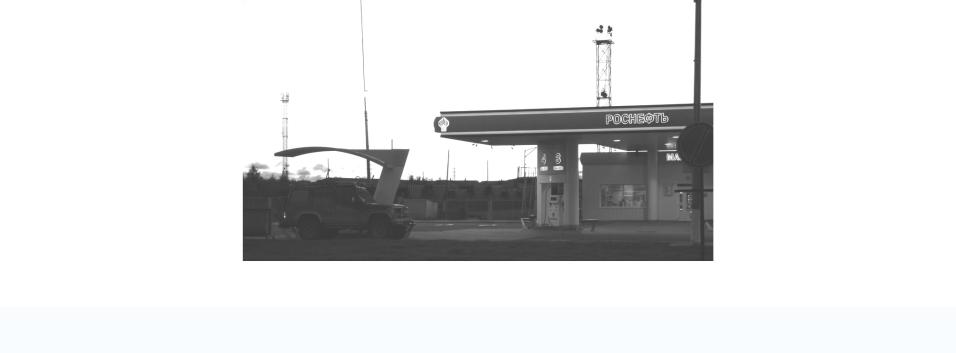
Russia has the world's largest natural gas reserves, the second largest coal reserves and the eighth largest oil reserves. It is the world's leading natural gas exporter and the second leading oil exporter. Oil, natural gas, metals, and