Материал: Unit 10
|
10 |
UNIT OBJECTIVES |
UNIT |
At the end of this unit, students will be able to: |
|
understand texts and conversations about moral |
||
issues and complaining |
||
discuss moral dilemmas, including attitudes to |
||
|
criminal behaviour |
|
|
describe problems with goods and services |
|
Values |
|
return goods and make complaints |
|
write an (informal) apology email |
|
|
|
UNIT CONTENTS
G GRAMMAR
Second conditional
Quantifiers; too / not enough
V VOCABULARY
Multi-word verbs: carry on, look after, put sth o (=postpone), hand sth in (to the authorities), feel like (=want), come round (visit), break up (end relationship), turn sth down (refuse), join in, pass on (a message, information, etc.)
Noun formation: complain – complaint, decide – decision, deliver – delivery, describe – description, enjoy – enjoyment, explain – explanation, queue – queue
Wordpower: multi-word verbs with on: carry on, get on with, go on, keep on, put on, try on
P PRONUNCIATION
Sentence stress: vowel sounds
Word stress
Sound and spelling: verbs and nouns
Sentence stress
C COMMUNICATION SKILLS
Talking about moral dilemmas
Describing problems with goods and services
Returning goods and making complaints
Writing an apology email Formal and informal language

 CULTURE NOTES
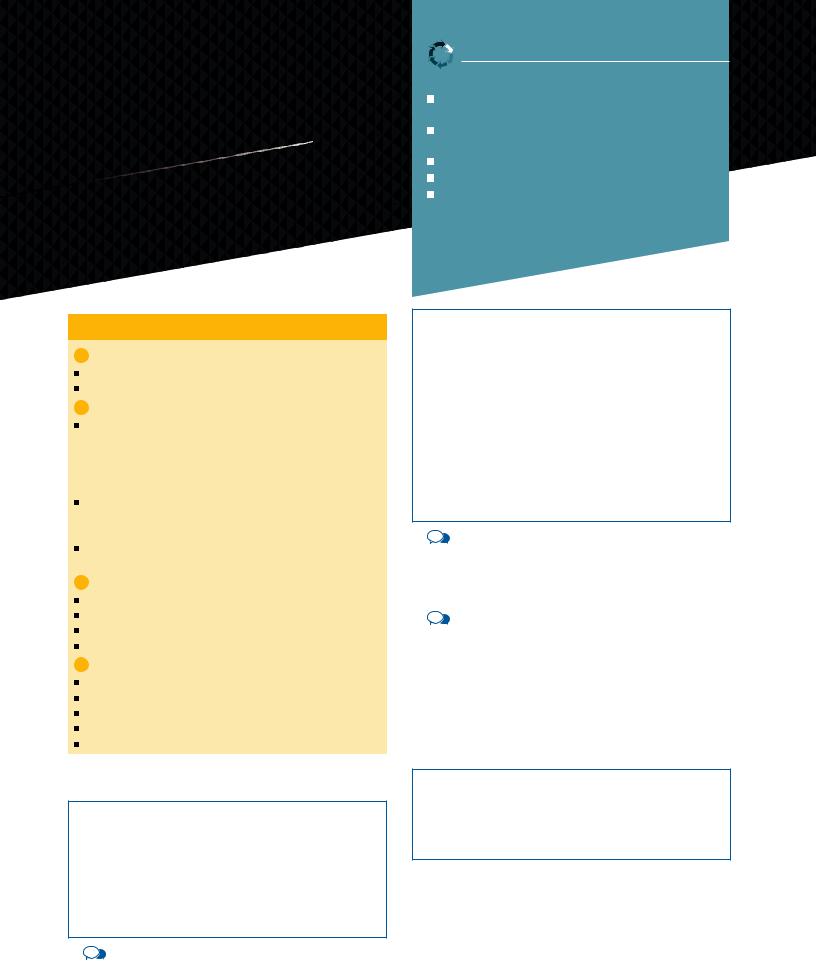
This picture is from a book by Professor Joseph Giacomin called Thermal – Seeing the World Through 21st Century Eyes. It contains thermal images, i.e. images produced by recording the temperature of people and things, using an infra-red camera. People can be seen in complete darkness as the thermal camera picks up their body temperature. The book includes pictures that show the effects of global warming, pollution, and how houses lose energy. It also gives an interesting picture of everyday events around us. This particular picture is of someone breaking into a car at
night and shows how, with modern technology and recording devices, no one is protected by darkness.
bStudents speculate what happens next. Write some expressions for making predictions on the board they can use to help them express their ideas. e.g. I think he’ll…, I think someone will ..., He’ll probably run away ..., He might ...
cStudents discuss the questions in pairs. The questions use the second conditional, which students will look at in this unit. Don’t spend time explaining the language point at this stage, but encourage students to express their ideas, using the structure I’d ..., and justifying their answers as far as possible. Monitor but don’t interrupt fl uency unless students make mistakes in their choice of vocabulary. Take feedback and see if the class agree on their answers. Ask for reasons and examples.
GETTING STARTED
 OPTIONAL LEAD-IN
Books closed. Write the words crime and criminal on the board and ask for an example of each. Put students in pairs to brainstorm as many words related to the two words as they can in two minutes. Collate their ideas and put them on the board. Suggested words: to steal, to rob, to break into, to burgle, to vandalise, to shoplift, thief, robber, burglar, vandal, shoplifter, police, prison, detective, killer, to kill.
a Ask students to tell you what is happening in the picture. Write some phrases for speculation on the board which they can use to help them express their ideas, e.g.
It looks like … , It/He might be ..., It seems as if ... . If you wish, give students information from the Culture notes below.
 EXTRA ACTIVITY
Ask students to tell their partners about a recent news story about a crime. They should try to say what happened, when and where. Circulate and give help where necessary.
Ask some students to share their stories with the class.
136 UNIT 10 Values



 10A
10A Would
Would you do
 the
the 


 right
right thing?


 OPTIONAL LEAD-IN
Books closed. Put students in pairs. Give them a few minutes to write down as many rules that they have followed so far today as they can. e.g. keeping to the speed limit, not playing loud music on public transport, not smoking in the corridor, etc. Ask them to say which rule on their list is the most and least important.
1 SPEAKING

 At the end of this lesson, students will be able to:


• talk about a moral dilemma

 • use the second conditional correctly


•understand people talking about illegal downloading
•understand and use multi-word verbs
c  3.20 Play the recording again for students to note down the reasons the speakers give for their answers. If necessary, pause the recording after each piece of information is given. Check answers together.
Answers
1 |
doesn’t hurt anyone 2 big companies, actors are rich enough |
3 |
it’s illegal 4 everyone does it |
5 |
doesn’t know how, worried about police |
aWrite the words legal versus illegal (B2) on the board and elicit from the students or explain that when something is legal it is allowed or permitted by the law; illegal means the opposite. Ask students to look at the pictures and match the activities a–e with the pictures 1–5. Check answers as a class.
Answers
a 2 b 5 c 1 d 4 e 3
bIn pairs, students put the activities in order from worst to least bad. Take a vote on which activity the group thinks is the worst.
cDiscuss the question as a class. Ask students under what circumstances doing some of these things might be justifi ed. Ask: Is it ever OK to park illegally / drive too fast on the motorway / download a fi lm from the internet, etc.? (For example in a medical emergency; if you have already bought the fi lm, etc.)
2 LISTENING
a Elicit from the class what kinds of things people download illegally (songs, fi lms, books, etc.). Students read the text about illegal downloading individually and discuss their opinions as a class. If you wish, give students information from the Culture notes below.

 CULTURE NOTES
Philip Pullman wrote a famous trilogy of fantasy books for children called His Dark Materials. Northern Lights, the first book in the trilogy, was made into a popular film called The Golden Compass, starring Nicole Kidman and Daniel Craig, in 2007.
b  3.20 Tell students that they are going to hear fi ve people being asked about downloading. For each speaker, students need to establish the person’s attitude towards downloading from the Internet (tell students to write ‘yes’, ‘no’ or ‘maybe’) and what kind of things they would download. Play the recording. Students make notes as they are listening or at the end. Check answers as a class.
Answers
Speaker 1: yes, TV programme; Speaker 2: maybe, TV programme (not if small company); Speaker 3: no, it’s illegal; Speaker 4: yes, TV programme, music (not if charity album); Speaker 5: no, can’t, may ask granddaughter
Audioscript
PRESENTER Downloading is in the news again, with the news that more people downloaded the hit show Game of Thrones than actually watched it on TV. We’re often told that downloading illegally from the Internet is the same as stealing from a shop. But do people really believe this? We asked the people of Camden Town: If you wanted to watch a TV programme but it wasn’t available in your country, would you download it illegally?
1Ah … maybe. I don’t know … Yeah, if the programme wasn’t available, I’d download it!
P What if it was on TV in your country, but not for another month?
1Yeah, I would still download it. What’s the difference? Downloading doesn’t hurt anyone and no one ever gets into trouble. It would just mean I didn’t need to wait a month!
2Maybe it depends who made the programme. I don’t think the big companies that make these TV programmes are poor. All the actors are rich enough … But if it was a film made by a small company,
it would be a bit different. I’d prefer to pay a company like that because they need the money.
3No, I wouldn’t. I just watch what’s on TV. No need to download things.
P And how about a book? Would you download a book? 3 Well, no. It would be illegal, I think.
PBut what if it was a book that you knew was in your local library. But you didn’t have time to go to the library.
3Well … I suppose … if it was in the library … but, no. It’s illegal. I wouldn’t do it.
4A TV programme? Of course, why not? It’s easy. Everyone does it! P And what about music? Would you download an album?
4An album …? Yeah, maybe. But I’m one of those strange people who
still buys CDs. So if I liked the album I’d buy it afterwards – because I like to own something I can hold in my hands.
P And what if it was a charity album? Would you download that?
4No, I wouldn’t download an album if it was for charity. That wouldn’t be right.
5I’d have no idea how to download a TV programme! But I’d ask my granddaughter to download it for me if I really wanted to see it, although I’d probably be worried about the police knocking at my door the next day.
 LANGUAGE NOTES
Some students confuse the word library and bookshop. Make sure they are clear about the difference: library – a place where you borrow books; bookshop – a place where you can buy books.
d Discuss the questions briefl y as a class. Encourage students to give reasons for their opinions.
UNIT 10 Values 137
3 GRAMMAR Second conditional
a  3.21 Play the recording for students to complete the sentences. Check answers as a class and elicit that the pattern of verb forms exemplified in all these sentences (if
+ would + verb in one clause + simple past tense in the other clause) is called the second conditional.
Answers
1 wanted 2 wasn’t 3 liked 4 was 5 wanted
bIndividually, students choose the correct options to complete the sentences about the form and usage of the second conditional. They compare their ideas with a partner before you check the answers as a class.
Answers
1 b 2 b 3 a

 LOA TIP CONCEPT CHECKING
•Ask: If your friend stole something from a shop, would you tell someone? and write it on the board. Ask these questions to reinforce the idea of an imaginary situation.
Are we asking about a real situation? (no)
Are we asking about an unreal or imagined situation? (yes) Are we asking about an imagined past action? (no)
Are we asking about imagined present or future action? (yes)
c 
 3.22 Students read the information in Grammar Focus 10A on SB p.160. Play the recording where indicated and ask students to listen and repeat. Students then complete the exercises in Grammar Focus 10A on SB p.161. Check answers as a class. Tell students to go back to SB p.99.
Answers (Grammar Focus 10A SB p.161)
a |
1 e 2 h 3 a |
4 g |
5 f 6 b 7 c |
8 d |
||
b 1 were; I’d give |
2 would be; wasn’t |
3 I had; I’d read |
||||
|
4 would; you saw |
5 didn’t smoke; you’d save |
||||
|
6 wouldn’t; didn’t like |
7 found; would you |
||||
c |
1 I were/was you |
2 I wouldn’t eat |
3 I didn’t eat them |
|||
|
4 they would throw 5 would you do |
6 a shop assistant saw |
||||
|
7 I would promise |
8 they didn’t believe 9 they called |
||||
|
10 You would go |
|
11 the police came |
|
||
|
12 they wouldn’t send |
13 it would be |
|
|||
 LANGUAGE NOTES
As with the first conditional, the clauses can be in either order but when the if-clause comes first, we use a comma.
 CAREFUL!
Though mixed conditional sentences are possible, students sometimes use will when would is more appropriate, e.g. If I were you, I’ll download it. (Correct form = If I were you, I’d download it.)
d  3.21 Pronunciation Play the recording for students to listen and notice the two different possible pronunciations of the vowel sound in would: /wʊd/
(when stressed) and /wəd/ (when unstressed). Point out that the l is always silent. Model the sentences again for students to repeat.
e  3.23 Play the recording again for students to work out the rules. Check answers as a class.
Answers
1 silent 2 questions 3 /wʊd/
fRead the sentence parts with the class (the first has an example) and elicit some answers. Students complete the sentences individually with two different ideas.
gStudents compare their sentences with a partner.
Encourage them to expand on their answers and ask their partner questions as in the examples in the speech bubbles. Take feedback and ask students to tell you the most surprising or interesting thing they learned about their partner.
4 VOCABULARY Multi-word verbs
a Ask students to look at the pictures and say what is happening in each one. Ask: What’s the best thing to do next? for each situation. You may wish to help them with the words in the Vocabulary support box.
 VOCABULARY SUPPORT
crash (B1) – to have an accident with another vehicle damage (B1) – the result of hitting a car
notes (B1) – paper money
pavement (B1) – place beside the road that we walk on
bRemind students that in English there are a lot of verbs composed of a main verb and a preposition (or sometimes two prepositions) and the meaning is sometimes quite literal and easy to guess, e.g. put on (clothes) or sometimes more abstract, e.g. put off
(meaning to postpone or cancel). Students match the multi-word verbs in bold with the definitions. Check answers as a class.
Answers
1 look after 2 put off 3 carry on 4 hand in
c Students complete the exercises in Vocabulary Focus 10A on SB p.140. Check answers to the exercises and go through the Tip with the class to check understanding.
Tell students to go back to SB p.99.
Answers (Vocabulary Focus 10A SB p.140)
a 1 carried on |
2 felt like 3 came round |
4 looked after |
5 broke up |
6 turned down 7 joined in |
8 put off |
9 handed in |
10 passed on |
|
b1 came round 2 put off 3 pass on 4 broke up 5 joined in 6 handed in 7 turned down 8 feel like 9 looking after
10 carry on
5 SPEAKING
aIn pairs, students discuss the questions. Take feedback as a class and ask students what they learned about their partner.
bTell students that they are going to do a quiz to find out how honest their partner is. Divide the class into pairs and assign A and B roles. Student As read the surveys on SB p.129 and Student Bs read the surveys on SB p.131. They take turns to ask each other the quiz questions. When they have finished, ask students to look at the results on SB p.127 to find out how honest they are.
ADDITIONAL MATERIAL
Workbook 10A
Photocopiable activities: Grammar p.222, Vocabulary p.246, Pronunciation p.283
138 UNIT 10 Values

|
|
|
I’m too embarrassed |
|
• read and understand a text about a shopping survey |
|||
10B to complain |
|
|
|
At the end of this lesson, students will be able to: |
||||
|
|
|
• understand people talking about a shopping survey |
|||||
|
|
|
|
|
|
|
• use quantifi ers and too / not enough correctly |
|
|
|
|
|
|
|
|
• understand an expert talking about complaining |
|
|
|
|
|
|
|
|
• make nouns from diff erent verbs |
|
|
|
|
|
|
|
|
• talk about complaining in general |
|
|
|
|
OPTIONAL LEAD-IN |
|
|
|||
|
|
|
|
|
|
|
|
|
|
Books closed. Tell students about somebody you know |
|
|
|
|
|
||
|
who complains a lot, e.g. My father always complains about |
|
|
|
|
|
||
|
other people’s driving (it’s too fast, dangerous); he complains |
|
|
|
|
|
||
|
|
|
|
LANGUAGE NOTES |
|
|||
|
about the treatment the doctor gives him (it doesn’t work, |
|
|
|
|
|||
|
|
verb: complain noun: complaint person: complainer |
|
|||||
|
makes him sleepy). Ask students if they can think of a person |
|
|
|||||
|
among their family or friends (not in the class) who enjoys |
|
f |
|
Ask students read the text again and list all the |
|||
|
complaining. Students share their ideas with the class. (If |
|
|
|||||
|
|
|
things that the British complain about. Take feedback |
|||||
|
students come from a culture where describing somebody |
|
|
|||||
|
|
|
from the class and write the things mentioned on the |
|||||
|
they know as a complainer would be disrespectful, you |
|
|
|||||
|
|
|
board (poor service, not enough shop assistants, slow |
|||||
|
could ask them about characters in comedies/dramas who |
|
|
|||||
|
|
|
queues, bad quality products, rude staff , delivery |
|||||
|
complain a lot.) |
|
|
|||||
|
|
|
problems). Ask if there any things in this list which |
|||||
|
|
|
READING AND SPEAKING |
|
|
people wouldn’t complain about in students’ home |
||
|
1 |
|
|
|
countries and why. |
|||
|
a |
|
Point out the title of the lesson I’m too embarrassed |
|
|
|
GRAMMAR Quantifi ers; too / not enough |
|
|
|
|
2 |
|
||||
|
|
to complain and teach or elicit from the class the |
|
|
||||
|
|
|
||||||
|
|
meaning of embarrassed (B1) – feeling shy or ashamed |
|
a Books closed. Tell students you are not having a very |
||||
|
|
about something. Ask: Is it OK to complain about things |
|
|
good day and they are going to guess your complaints. |
|||
|
|
in your country or are most people usually too embarrassed |
|
|
Think of three complaints about your day, using too, too |
|||
|
|
to complain? Elicit examples of the kind of things people |
|
|
much or too many, e.g. It’s too hot in here. There are too |
|||
|
|
complain about. |
|
|
many chairs. There was too much sugar in my coff ee. Say the |
|||
|
|
|
|
|
|
beginning of each complaint and clues to the rest of the |
||
|
|
|
LOA TIP ELICITING |
|
|
sentences by miming, e.g. It’s too …. (mime hot). There |
||
|
|
|
|
|
|
are too many … (point to chairs). There was too much …. |
||
|
Say: I went shopping yesterday and when I got to the |
|
|
(pretend to drink coff ee and make face). Can they guess |
||||
|
checkout, I found I didn’t have enough money. How did I feel? |
|
|
what your complaints are? Write the words up they give |
||||
|
(embarrassed) Ask: When have you felt embarrassed? Ask one |
|
|
you (hot, chairs, sugar in my coff ee). Now try to elicit the |
||||
|
or two students to give you an example. |
|
|
rest of the complaint from the students and write the full |
||||
|
|
|
sentences on the board. Elicit or correct mistakes with |
|||||
|
|
|
|
|
|
|||
|
b In pairs students match the complaints and what people |
|
|
forms with too / not enough. Books open. Students look at |
||||
|
|
|
the complaints in 2a and answer the questions. Remind |
|||||
|
|
are complaining about. Check answers as a class. Elicit or |
|
|
||||
|
|
|
|
them about countable and uncountable nouns by eliciting |
||||
|
|
explain the meaning of rug (B1) – a small carpet. |
|
|
||||
|
|
|
|
examples, or putting person/salt on the board and asking |
||||
|
|
Each time a student gives you the right answer, ask them |
|
|
||||
|
|
|
|
which is countable (person) and which is uncountable |
||||
|
|
to explain the meaning of the word – e.g. the price is how |
|
|
||||
|
|
|
|
(salt). Check answers as a class. |
||||
|
|
much something costs, the quality is how good it is, etc. |
|
|
||||
|
|
|
|
|
Answers |
|||
|
|
|
Answers |
|
|
|
||
|
|
|
|
|
||||
|
|
|
|
|
|
1 a too b not enough 2 a after, b after, c before 3 a many, b much |
||
|
|
|
1 price 2 quality 3 delivery 4 service |
|
|
|
||
|
|
|
|
|
|
|
|
|
|
|
|
|
|
|
|
|
|
|
c |
|
In pairs, students discuss their recent experience of |
|
|
|
|
|
|
|
|
|
|
|
|||
|
|
|
|
|
LANGUAGE NOTES |
|
||
|
|
the situations in 1b. Take feedback as a class. Encourage |
|
Students may have a problem with pronunciation and |
|
|||
|
|
students to expand their answers by saying where, why |
|
spelling of enough /ɪˈnʌf/. |
|
|||
|
|
and when. |
|
|
||||
|
|
|
|
|
|
|
||
dBefore students look at the title of the article, ask them if they think the British complain a lot or not. Then ask them to look at the title. Ask: Are you surprised by this? Why / Why not?
eIndividually, students scan the article and underline the key information the task asks them to locate. Encourage them to compare their answers with a partner then check as a class.
Answers
1Britain (the British), Germany (the Germans), Italy (the Italians), Sweden (the Swedish).
2What do the British complain about? Why do some choose not to complain?
3the service is not good enough
4five minutes
5don’t have time
b |
3.24–3.25 Students read the information in |
|
Grammar Focus 10B on SB p.160. Play the recording |
|
where indicated and ask students to listen and repeat. |
|
Students then complete the exercises in Grammar Focus |
|
10B on SB p.161. Check answers as a class, making sure |
|
students are checking for countable and uncountable |
|
nouns and negative and positive sentences. Point out |
|
that in Exercise d, 1–3 can be past or present. Tell |
students to go back to SB p.100.
UNIT 10 Values 139

Answers (Grammar Focus 10B on SB p.161)
a |
1 c 2 a 3 d 4 a |
5 c 6 d |
b |
Correct: 2, 3, 5, 7 |
|
c |
1 There aren’t many |
4 A few of 6 I love hot / very hot |
|
8 too difficult |
|
d1 There were too many people on the beach. 2 The soup was too hot.
3 She wasn’t tall enough to reach the top shelf. 4 The waiter spoke too quickly.
5 The service here is too slow.
6 Sorry, I don’t have enough money.
cStudents choose the correct options individually. Check answers as a class.
Answers
1 too 2 too many 3 warm enough 4 too much 5 enough seats 6 long enough
d In pairs, students talk about possible situations for each complaint in 2c. Take feedback as a class. How many possible different contexts can students find for each complaint?
Suggested answers
1 swimming pool/holiday 2 restaurant/hotel 3 hotel/school/work 4 cinema/theatre/lecture 5 restaurant/classroom/lecture 6 holiday tour
3 LISTENING
a Ask students to cover the TOP TEN and BOTTOM TEN lists and to read the title and introduction to the survey. Ask students to guess where their country would be on the list of the most complaining countries. Then they look at the survey results to check if their country is named and if they were right. Ask: What is the difference between this survey and the survey on p.100?
(This survey is international, not just Europe. The survey question was different: Have you made a complaint in
the last 12 months?) Have a brief discussion about why students think the countries at the top complain a lot and why the countries at the bottom of the list don’t.
After reading about the survey, ask students to cover the text. Ask them what these numbers refer to:
30,000 (the number of people asked), 30 (the number of different countries), 12 (months: the period of time the survey was for).
b  3.26 Tell students that they are going to listen to a radio programme about the survey. Read through the two questions and play the recording for students to listen and answer. Check answers as a class.
Answers
1 Brazil, China 2 yes (Clara); no (Feng)
Audioscript
PRESENTER Now, a new survey has shown the countries in the world where people complain the most. And to discuss the results we’ve got two guests – Clara Gomes from Brazil, which is in the top ten of countries that like to complain, and Zhang Feng, from China, from the bottom ten on the list.
CLARA Good morning. FENG Good morning.
PSo let’s start with you, Clara – what do you think of the survey results?
CWell, I’m surprised we’re in the top ten, but I’m not shocked because things are slowly changing in Brazil. Many Brazilians have got more money these days. So they buy more and also expect better quality – if something’s not good enough, they’ll complain.
And another thing is education. I think people know more now about the law than they used to. They know what the companies have to do, like replace things if they break easily, or giving customers their money back if the bill is wrong … so they’re asking companies to play by the rules.
POK, and what about China, Feng? You’re very low down the list. Do you think that’s surprising?
FNot really, not these days. In China, people don’t really believe everything a company says. Because of this they always like to check the products carefully before they pay for them. When you buy something online in China, you can contact the company first to check all the details of the product – it’s very quick and easy to do. And then, you don’t have to pay when you order, you don’t even have to pay when the product arrives – you only pay if you think the product is the same as the product that the company promised. So in the end, there isn’t much to complain about.
 LANGUAGE NOTES
The phrase play by the rules may be unfamiliar to your students. It means to follow the rules, to not break the rules. It comes from sport and games where the rules must be followed.
c |
3.26 Read through the questions with the class. Play |
|
the recording again for students to answer the questions. |
|
If necessary, play the recording twice and/or pause |
|
after the information to give students time to answer. |
|
Check answers together. Ask students: Do you think what |
|
companies do in China is a good thing? Should companies |
|
in other countries do the same? Why / Why not? |
Answers
1 Brazilians have got more money these days and expect better quality. People know more now about the law than they used to.
2 You can contact the company first to check all the details of the product. You don’t have to pay when you order or when the product arrives. You only pay if you think the product is the same as the product that the company promised.
dDiscuss the question as a class. Ask students if they are surprised by where their country is on the list. If their country is not on the list, ask where they think it might appear ‒ between 11 and 29 ‒ and why.
eIn pairs, students complete the advice about complaining. Give them a few minutes to try and fill the gaps, then the answers on the board in jumbled order for them to choose from. Check answers as a class.
Accept any alternative answers offered by the students as long as they are grammatically correct and make sense.
|
Answers |
|
1 the same day 2 shout 3 description 4 decision |
|
5 manager, director 6 explain, angry 7 felt, enjoyment |
f |
3.27 Tell students that in the next part of the |
|
programme, an expert on complaining joins the |
|
discussion. Play the recording for students to compare |
|
their advice from 3e with the expert’s. |
140 UNIT 10 Values